
Nikro Air Duct Cleaning in Commerce City: A Homeowner’s Guide
A truck-mounted vacuum and a Nikro negative-pressure unit both get called “professional equipment,” but only one of them keeps dislodged debris from blowing back into your living space during the job. That distinction matters more in Commerce City than most homeowners realize. This guide explains what Nikro machines actually do inside your ducts, so you can verify a contractor is using the equipment correctly rather than just hauling it to the house.
If you’d rather not sort through it alone, call (877) 492-4447. We answer 24/7.
Why Nikro Equipment Is the Line Between Cleaning and Redistribution
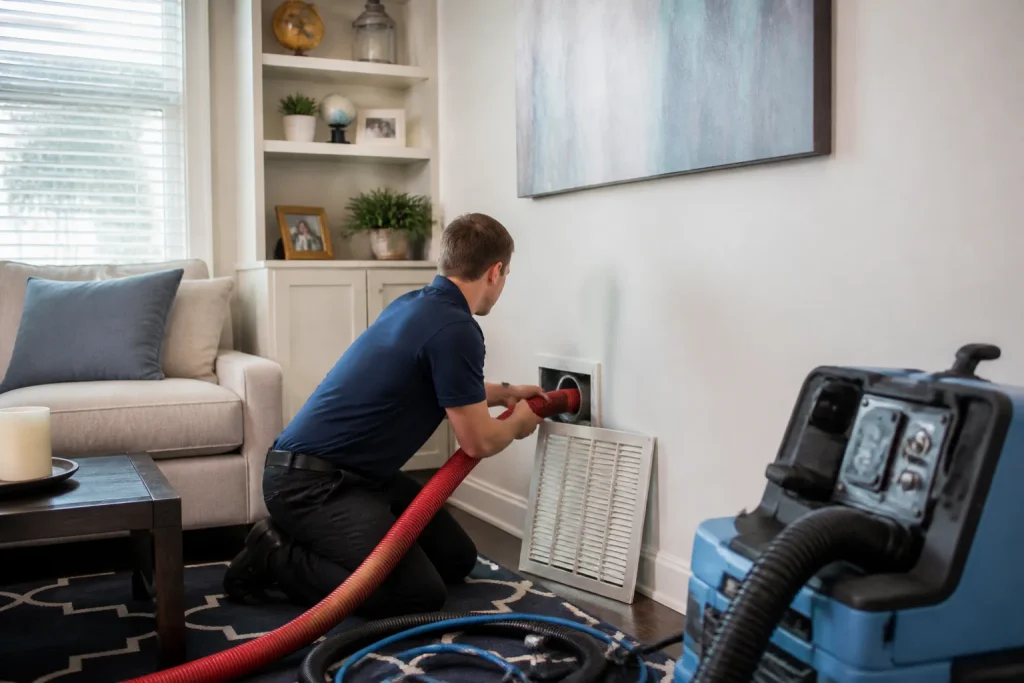
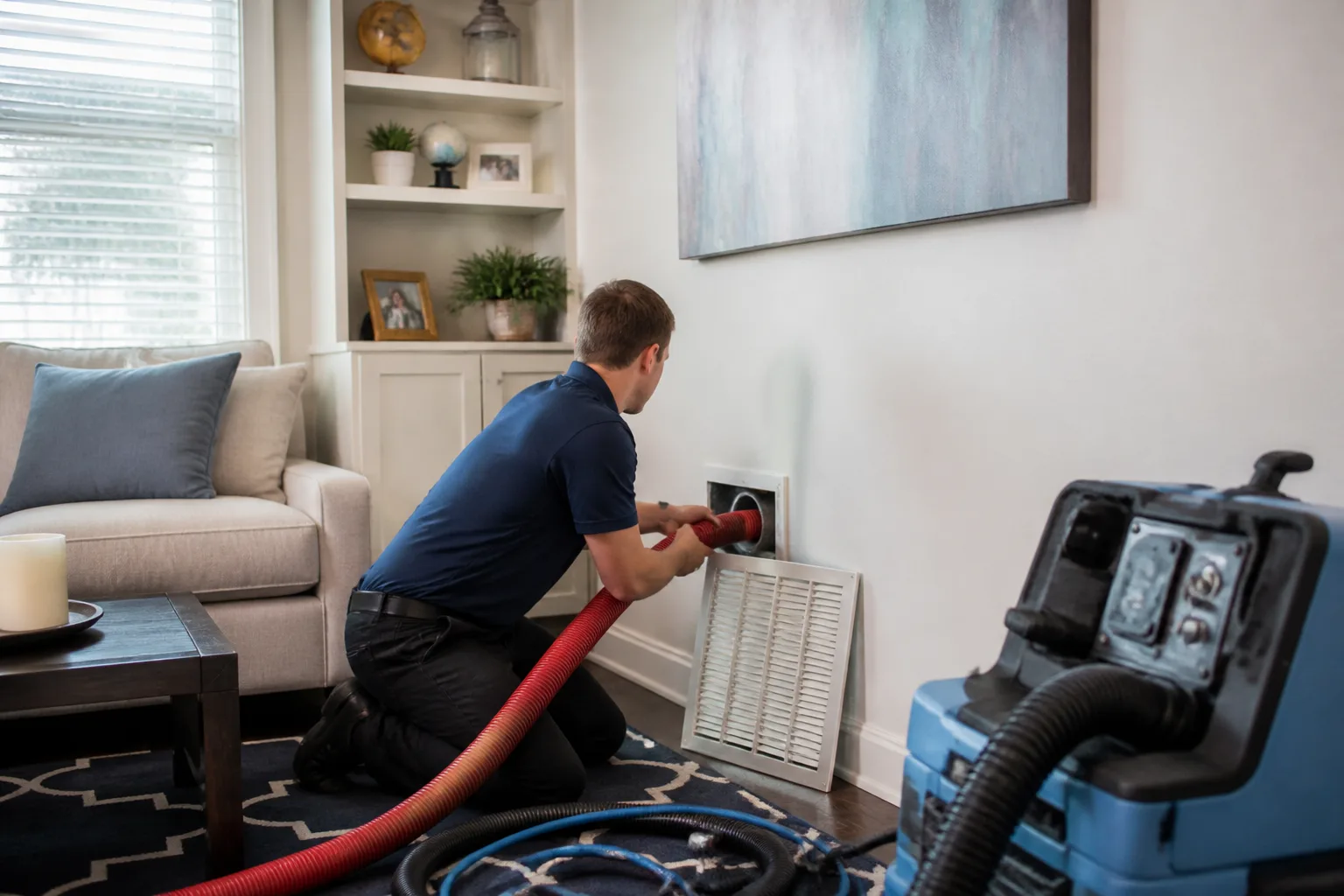
Negative-pressure cleaning works on a simple principle: capture the debris at the point it’s dislodged, before it can escape into the room. A Nikro negative-air unit seals onto the duct system at a main trunk connection and pulls a continuous vacuum through the entire network. As a rotary brush agitates the duct walls, loosened dust, dander and construction grit travel toward the vacuum rather than settling back into the airstream.
What separates this from a low-bid job is not the machine sitting in the driveway. It’s whether the machine is connected, running at the right pressure, and paired with the right brush head for the duct type. In our experience across Commerce City, the biggest gap we find is a contractor running a handheld shop vacuum at one register while dust puffs out of the others. That’s not cleaning. That’s a light dusting with extra steps.
A proper Nikro-based job typically involves:
- Cutting access panels at strategic points so the entire trunk and branch system can be reached, not just the grilles
- Connecting the negative-air unit to create sustained suction through the whole duct run
- Feeding a rotary brush system through each branch to mechanically agitate debris off the walls
- Verifying airflow and pressure at the vacuum unit as work progresses
- Sealing access points cleanly after the job is done
Continuous containment is the point. The moment the vacuum stops pulling, dust starts looking for somewhere to go, and usually that somewhere is your living room.
Source Removal vs. Blow-and-Go: What Commerce City Homeowners Actually Get
Blow-and-go duct cleaning is still common around Commerce City, and it’s easy to understand why. It’s fast, it’s cheap, and from the customer’s side it looks like work is happening. A technician runs a compressed-air whip through a vent or two, dust clouds out of the returns, and the job is “done.” What’s left behind is the bulk of the debris, now redistributed across the system instead of removed from it. Within weeks it settles again, and the cycle repeats.
Source removal, which is what Nikro negative-pressure equipment is designed for, works the other way around. The debris has to be captured and physically removed from the property. When a job is done right, the evidence shows up in the collection bag, not on your furniture.
Ask yourself these questions before hiring anyone for air duct cleaning in Commerce City:
- Does the quote include access panel placement, or just vent work?
- Will they connect a negative-air vacuum to the main trunk, or work vent-by-vent?
- Do they agitate duct surfaces with a rotary brush, or just blow air through?
- Will they show you the collection results before they leave?
If the answer to the last question is vague, that’s usually your answer.
Why Debris Containment Matters More in Commerce City’s Climate
Commerce City sits in a high-wind, high-dust environment, and that changes the math on duct cleaning. Wind-driven dust from open ground, construction activity and seasonal dry spells finds its way into return ducts and settles in the system. Homes here build up debris faster than they would in a wetter climate, and once the system cycles on, that material gets pulled back into the living space.
For a cleaning contractor, that means containment is not a nice-to-have. Loosening a heavy load of accumulated dust without a running negative-pressure unit is exactly the scenario where a homeowner ends up with a fine layer of grit across the furniture by the end of the visit. With the Nikro unit connected and pulling continuously, that material goes into the collection system instead.
The same climate logic applies to duct health. Dry air and wide temperature swings promote small cracks and loose seams that let unfiltered air leak into the system, which recontaminates ducts faster. Paired with HVAC cleaning, duct repair and sealing keeps the work from being undone. A cleaned duct with a failed seam is a short-term win.
What You Should See and Hear During a Nikro-Based Job
A legitimate negative-pressure cleaning is not a quiet process, and that’s a good sign. Homeowners who have only had blow-and-go work done are often surprised by how much is going on. Here’s what a properly run job looks like from the living room:
- Setup takes time. Expect the technician to spend 20 to 40 minutes laying out containment, sealing registers, and connecting the vacuum unit before any cleaning starts. Setup is where the containment standard is set.
- Access panels are cut. Small openings are made at the trunk and at strategic branch points. They’re necessary. Ask how they’ll be sealed when the job is finished.
- The vacuum runs continuously. The unit should be running the whole time cleaning is happening, not turned on for the vent work and shut off. You’ll hear it the entire visit.
- Airflow is checked at the end. A thorough technician verifies that grilles return to full flow and that no registers are blocked by loosened debris or displaced insulation.
- You get a walkthrough. Before-and-after photos of your own ducts, not stock images, are how you know the job was actually done.
If a contractor finishes in under an hour and doesn’t want you watching the equipment run, that’s worth noting.
Questions to Ask Before You Book a Nikro-Based Cleaning
Nikro equipment on a truck doesn’t mean it’s used at spec. Every contractor in Commerce City with a marketing budget can put “professional-grade equipment” on a website. What you want to confirm is that the machine is being connected, run, and used for what it’s designed to do. These questions cut to the point:
- Will the negative-air unit be connected to the main trunk during the entire cleaning? A yes-or-no answer, not a broad statement about “professional methods.”
- What brush heads are being used in my duct type? Rigid metal ducts and flex duct call for different tooling. A technician who can’t answer this hasn’t thought about it.
- How many access panels will you cut, and how will you seal them? Access placement is a planning decision, not an afterthought.
- Do you verify airflow before you leave? A quick walk to each register confirms the system is back in balance.
- Can I see photos of my own ducts before and after? Not the marketing gallery. Yours.
The technicians we work with use Rotobrush rotary tooling alongside Nikro negative-air equipment, and they know Honeywell and Aprilaire whole-home air quality systems well enough to recommend filtration upgrades when the ducts are clean. If a contractor can’t walk you through any of that, keep asking questions.
When to Call a Pro (and What Else Belongs on the List)
Not every dusty house needs a full duct cleaning, but some warning signs do. Call a professional when you notice: visible dust streaks or fuzz around the supply registers, a musty odor when the system kicks on, allergy symptoms that get worse when the HVAC runs, or a noticeable drop in airflow at the vents. If you’ve recently finished a renovation, or your home has had a pest problem, ducts should be checked and likely cleaned.
The same visit is a good time to handle dryer vent cleaning, which is a fire-risk issue first and an efficiency issue second. Lint accumulates faster than most people realize, especially in tight utility closets, and a blocked dryer vent is a genuine hazard. Bringing the full air pathway under one scope means you’re not calendar-juggling three different contractors to get the house running clean.
If you’re new to the area, our Commerce City air duct cleaning page covers the full scope of what we handle.
The Bottom Line
Nikro negative-air equipment is a specific mechanical standard, not a marketing phrase. Connected correctly, it captures debris at the source rather than redistributing it through the house. In a high-dust place like Commerce City, that distinction makes a real difference in how long the work holds up. Our technicians have up to 14 years of experience with contractor-grade equipment across the full air pathway: cleaning, sanitizing, duct repair and sealing, and dryer vent clearing. One flat price per system, agreed before work starts, and before-and-after photos of your own ducts. No teaser pricing, no surprise line items.
If you’re in Commerce City and need help, Commerce City Air Duct Cleaning offers free estimates – call (877) 492-4447. We answer 24/7. Fast dispatch from 7am to 7pm, Sunday through Friday.
Frequently Asked Questions
Ask to see it connected to the main trunk before the job starts, not just sitting on the driveway. A live negative-pressure unit runs the entire job, and the technician can walk you to the access point where it’s sealed in. If the vacuum isn’t connected, it isn’t doing its job. Call (877) 492-4447 for a free estimate with a team that will show you the setup.
Whole-system pricing in the area typically depends on square footage, number of registers, and whether HVAC components and dryer vent are included, so a reputable contractor quotes per system rather than per vent. We set one flat price per system before work begins, and the written estimate is the final word. Call (877) 492-4447 for an exact quote – estimates are free.
Cheap quotes usually skip the negative-pressure stage, the access panels, or both. Cheap means vent-only work with intermittent vacuuming, not source removal. The dust comes back within weeks, and you’ve paid twice. Ask what’s included in the quote, then ask what isn’t. Call (877) 492-4447 and we’ll give you a straight answer on scope.
Most homes in Commerce City benefit from a full cleaning every two to five years, and homes with pets, recent renovations, or anyone with respiratory sensitivity land at the shorter end of that range. High-wind dust loads push the interval shorter still. When in doubt, a visual check settles it. Call (877) 492-4447 for a free estimate and a straight recommendation on timing.
Written by the team at Commerce City Air Duct Cleaning.
Need Air Duct Cleaning Help?
Call Commerce City Air Duct Cleaning - the local pro we connect you with is licensed and insured, here with fast help in Commerce City.
(877) 492-4447