
Last updated November 25, 2026
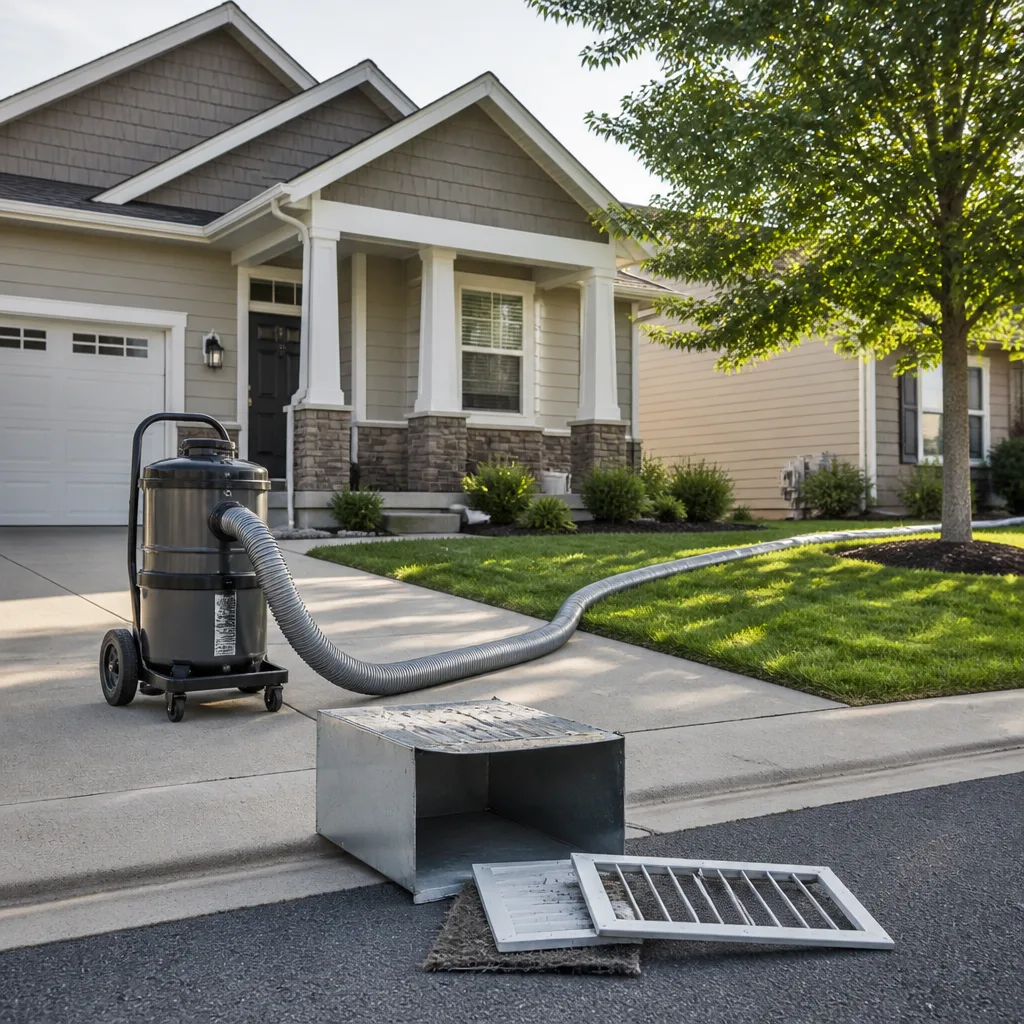 Whole-home duct cleaning
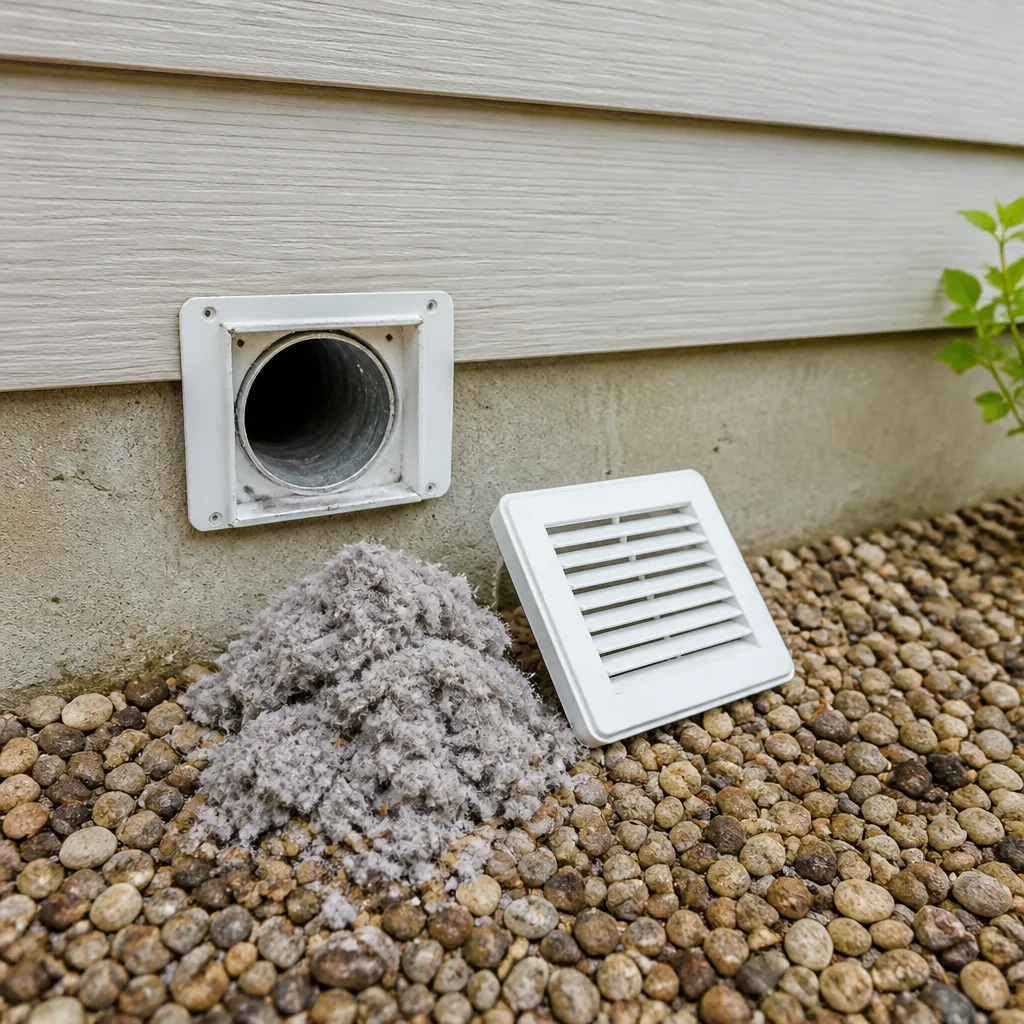 Dryer vent cleaning
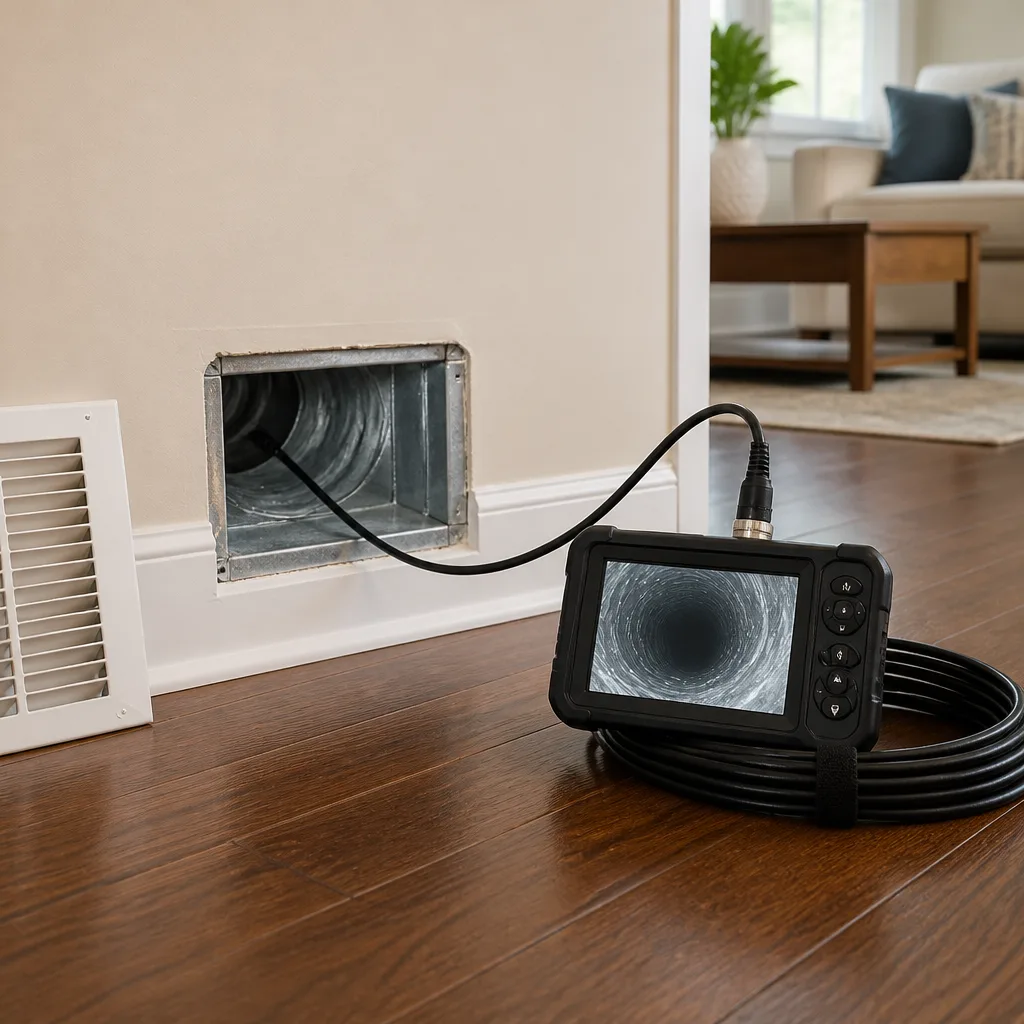 Camera inspection
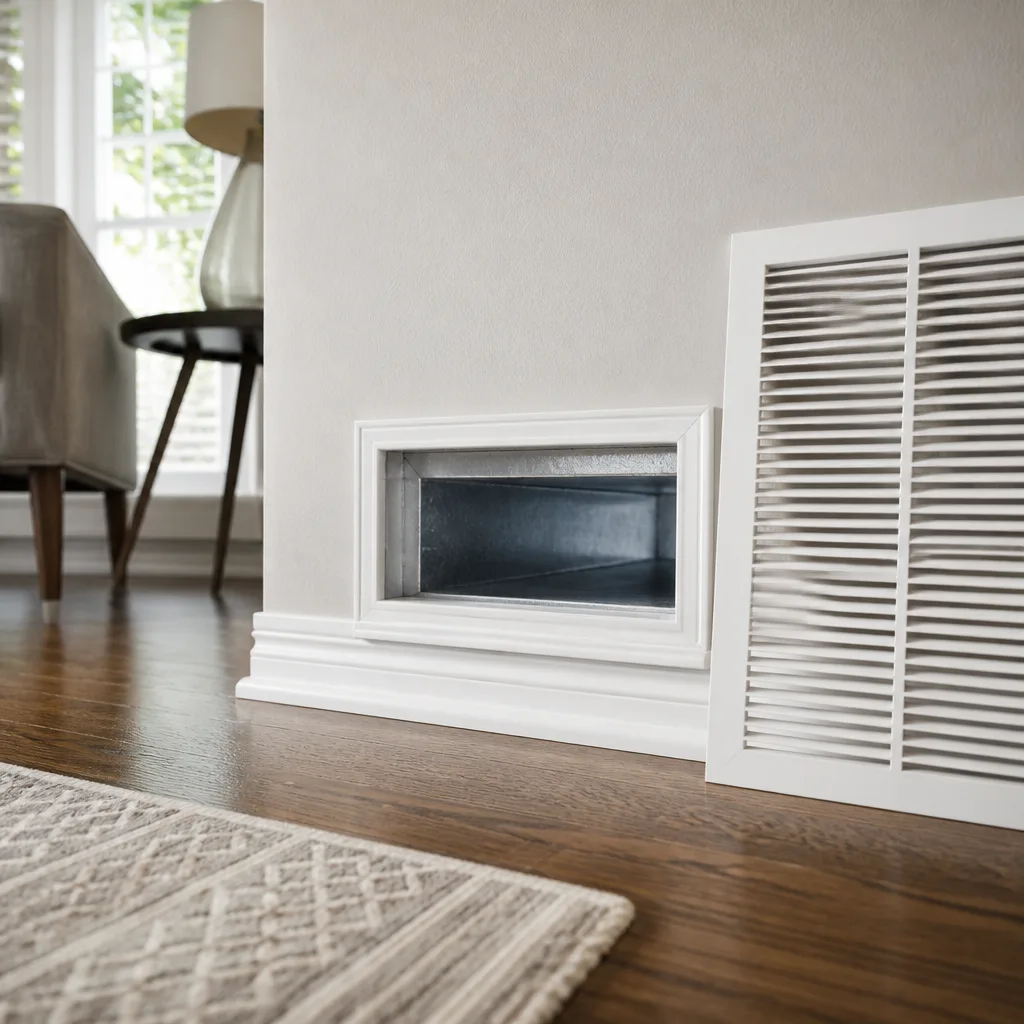 Sanitizing & deodorizing
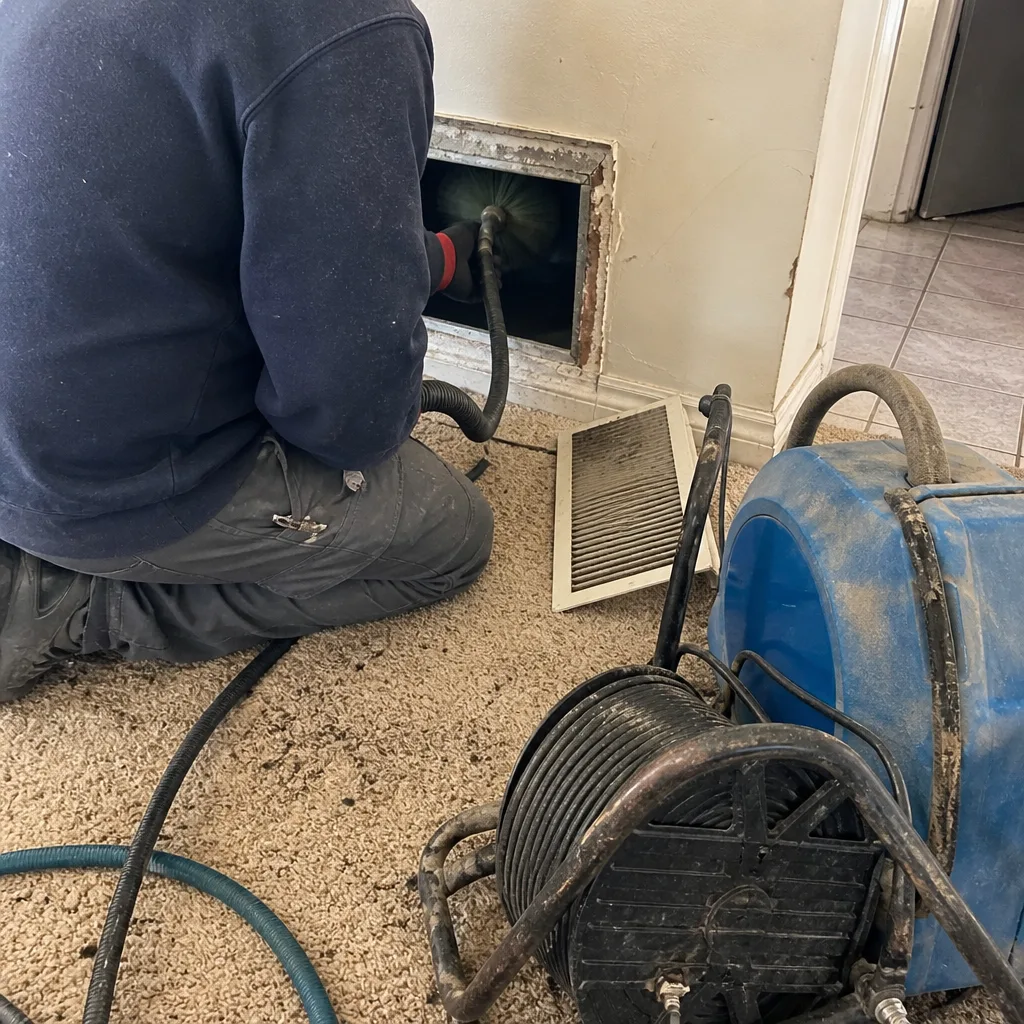
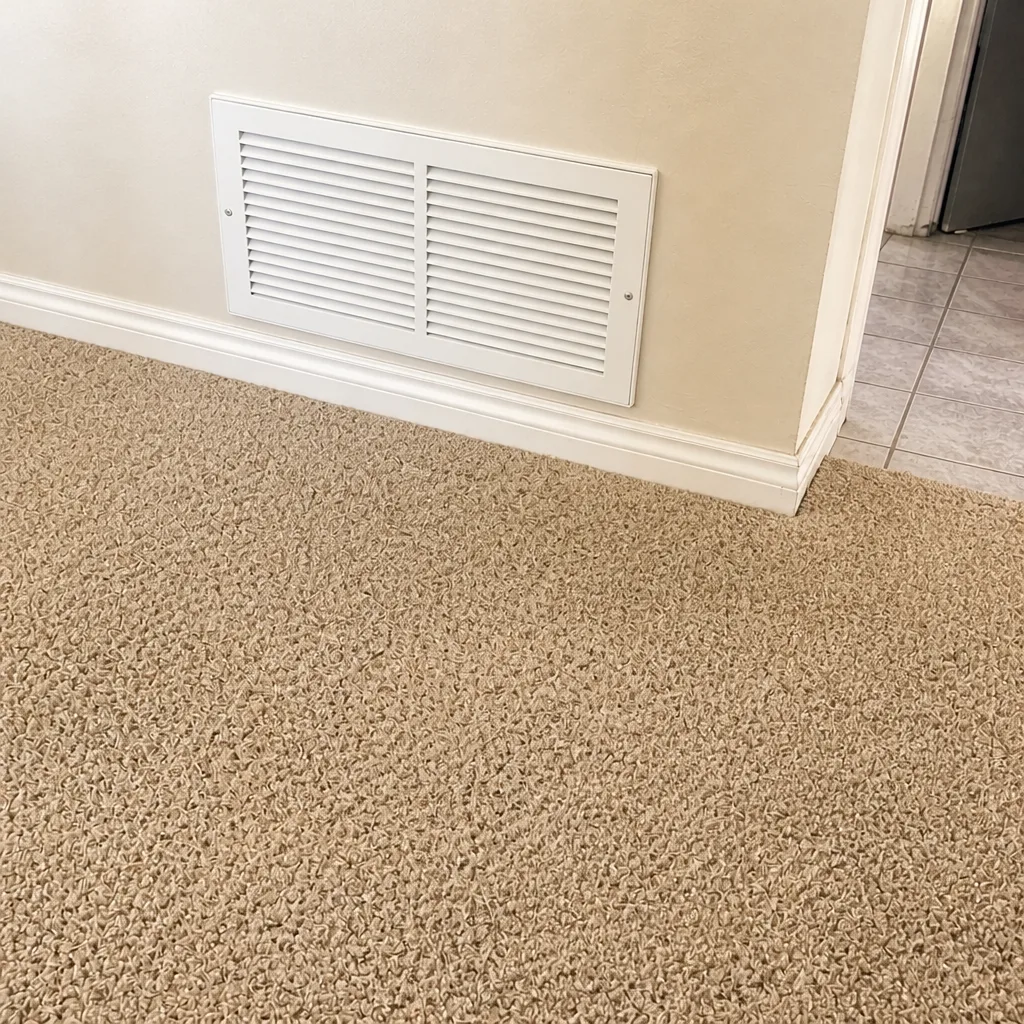
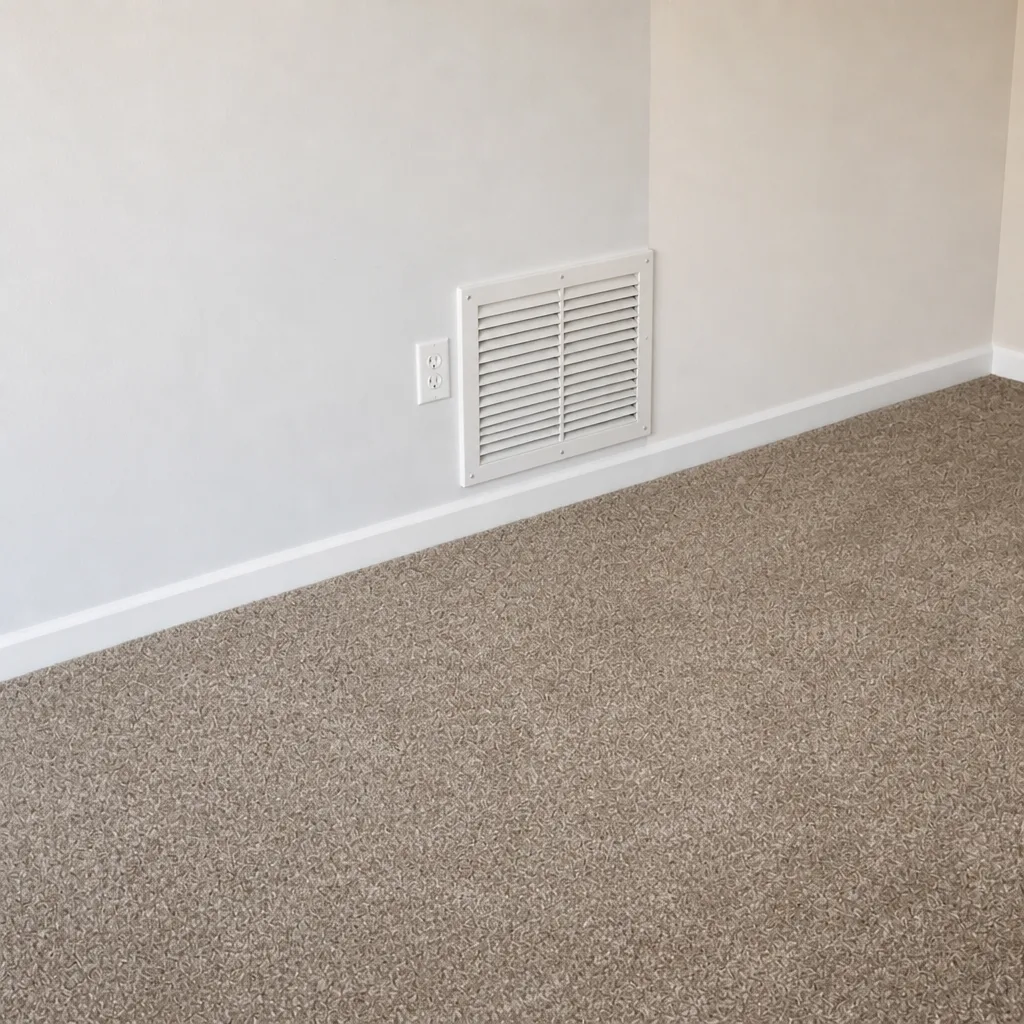
Whole-system duct and dryer vent check with before-and-after photos - you see exactly what came out of your vents
That "$99 whole-house special" is a bait ad - the real number appears once they are in your hallway, or the "clean" is a shop-vac at the register. We photograph the inside of your ducts before and after instead.
Choosing the Right Air Duct Cleaning Brand: A Buyer’s Guide for Commerce City
Here’s the problem with shopping for duct cleaning: there’s no consumer-facing equipment standard in this trade. A contractor can advertise “professional-grade equipment” and be describing anything from a shop vac with a long hose to a truck-mounted negative-pressure unit with a rotary brush system. Those two setups produce very different results in your home, and the phrase on the website doesn’t tell you which one is pulling into your driveway. In Commerce City, where new construction sits close to older housing and everyone’s HVAC runs hard through dusty summers and cold winters, the difference matters. This guide teaches you to ask about specific equipment and read the answers like a pro.
Quick Answer
The right air duct cleaning brand in Commerce City is the one that can name its negative-pressure equipment and its agitation tools without hesitation, shows job photos with access cuts and containment in place, and quotes a whole-system price in writing before work begins. Judge contractors on equipment specs, containment practice, and documented before-and-after photos rather than on brand names, truck wraps, or coupon prices.
Styles & brands we work with
- Whole-home duct cleaning
- Dryer vent cleaning
- Camera inspection
- Sanitizing & deodorizing
Table of Contents
- Why “Professional Equipment” Means Nothing Without a Standard
- The Negative-Pressure Source: What CFM Tells You
- The Agitation Tool: Rotary Brush, Air Whip, or Skipper Ball
- Equipment Names Worth Recognizing
- Red Flags in Equipment Descriptions and Job Photos
- How to Cross-Reference Claims Against Photos and Training
- Cleaning-Only Crew or Full-System Contractor?
- The Questions to Ask Before You Book
Why “Professional Equipment” Means Nothing Without a Standard
Every duct cleaning company says it uses professional equipment. There is no consumer-facing certification body that stamps a truck as compliant, no equipment standard a homeowner can look up and verify. That leaves you with marketing language on one side and whatever is actually in the truck on the other. In our experience, the gap between those two is where most disappointing duct cleaning jobs come from.
What you can verify is specificity. A crew that runs a Nikro negative-air unit knows its CFM rating, knows how many feet of hose it takes to reach the far end of a return trunk, and knows why containment matters. A crew that answers “we use a big vacuum” doesn’t. The question isn’t whether a contractor owns equipment. It’s whether they understand it well enough to explain it to you in plain terms.
This matters more in Commerce City than the marketing suggests. Housing here ranges from newer builds with tight, well-sealed ductwork to older homes where flex duct has been patched and re-routed over the years. A single hose dropped into one register won’t reach the debris sitting in a disconnected run behind a knee wall. The equipment determines reach, and reach determines whether the job is real.
So treat equipment as a proxy. When a contractor describes their negative-pressure source and agitation tools specifically, you’re hearing from someone who takes the craft seriously. When they describe it vaguely, keep asking questions. That’s the whole method.
The Negative-Pressure Source: What CFM Tells You
Every proper duct cleaning job starts with negative pressure. Before any brush touches the inside of a duct, the contractor needs to put the system under vacuum so dislodged debris travels toward the collection point instead of into your living room. The two common approaches are a truck-mounted vacuum and a portable HEPA unit, and each has tradeoffs worth knowing.
Truck-mounted units
Truck-mounts are the heavy hitters. They pull very high airflow, often rated well into the thousands of CFM, and they handle large commercial jobs and long duct runs easily. The catch is hose reach and access. If the truck can’t park close to the house, or the layout makes a long hose run impractical, the crew either works short or uses a portable as backup.
Portable HEPA units
Portable units are what most residential crews use, and quality varies widely. A contractor-grade portable HEPA vacuum with containment is a different machine from a rented shop vac. Ask for the model and the CFM rating. A unit in the several-hundred-CFM range is a real vacuum. Anything a contractor can’t quantify is worth a second look.
Abatement Technologies air scrubbers are a positive signal here. They’re containment-grade equipment used in professional remediation work, and when a duct cleaning contractor brings that gear into a house, they’re treating the job as contamination control rather than a quick surface pass. That standard matters whether the customer is a homeowner off Highway 2 or a property manager with a commercial building near the Derby area.
If you want to understand how this plays out on a typical residential job, the process behind our air duct cleaning service walks through the sequence: containment first, negative pressure running, then agitation.
The Agitation Tool: Rotary Brush, Air Whip, or Skipper Ball
Negative pressure pulls, but agitation loosens. Debris bonds to duct walls over years, especially in a dry climate where dust settles and compacts. A vacuum alone on a dirty duct run won’t lift the layer off the metal. That’s why the agitation tool is the second half of the equation, and why different tools produce different results.
- Rotary brush systems. A rotating brush on a flexible shaft physically scrapes the duct walls, breaking debris loose so the vacuum can carry it away. It reaches the full circumference of the duct and works well on rigid metal. Rotobrush is the name most HVAC professionals associate with this category.
- Air whips. High-pressure air nozzles that sweep the duct interior. Effective on loose debris, but they’re air, not contact. On compacted buildup, a whip alone can leave material behind.
- Skipper balls. Pressurized balls that bounce along the duct surface. Good coverage in some configurations, but again, no mechanical contact with the wall.
What each tool misses matters as much as what it reaches. A whip that never contacts the metal won’t break the compacted layer. A brush that only handles round duct won’t clean a rectangular trunk well. The best crews use the right tool for each section, which is why the phrase “mechanically agitated and extracted” is the one to listen for. Both verbs have to be there.
Ask what agitation tool the crew uses and which parts of the system it covers. If the answer is “we brush the ducts,” follow up with what the brush does on the trunk line versus the branch runs. A crew that knows its equipment will answer without pausing.
Equipment Names Worth Recognizing
Recognizing a few equipment names helps you sort serious contractors from casual ones. None of these names prove a good job on their own. They’re signals, not guarantees. But when a contractor mentions them in context, and their answers about how the gear is used hold up, that’s a real point in their favor.
- Rotobrush. The rotary brush system most HVAC professionals know by name. It agitates duct walls mechanically, and a contractor who runs one has invested in a tool designed for duct interiors rather than a general-purpose vacuum.
- Nikro. Negative-air vacuum equipment that captures dislodged contaminants rather than recirculating them. A crew that runs a Nikro unit is set up for extraction, not just agitation.
- Abatement Technologies. Air scrubbers and containment gear used in remediation projects. When this equipment shows up on a residential call, the contractor is applying a contamination-control standard to home duct work.
- Viper. Another name that appears in serious HVAC professional toolsets, especially in truck-mounted systems and drain cleaning gear.
On the air quality side, familiarity with Honeywell and Aprilaire whole-home systems tells you the contractor understands what sits downstream of the ducts. Aprilaire and Honeywell equipment covers filtration, humidification, and dehumidification, and a technician who knows those systems can speak to the air pathway as a whole, not just the metal tube between the furnace and the register.
One more name worth asking about: Guardsman. It’s another product line that shows up in air quality conversations. If a contractor recognizes it, that’s another signal they work in this space regularly rather than showing up once a season.
Red Flags in Equipment Descriptions and Job Photos
Spotting a weak quote is often easier than spotting a strong one. These are the patterns we’ve learned to watch for, and they show up on a lot of pages marketing duct cleaning in Commerce City and across the metro.
- “High-powered vacuum” with no CFM spec. Power is not a number. CFM is. If a contractor can’t tell you the airflow rating of their equipment, they either don’t know it or would rather you didn’t ask.
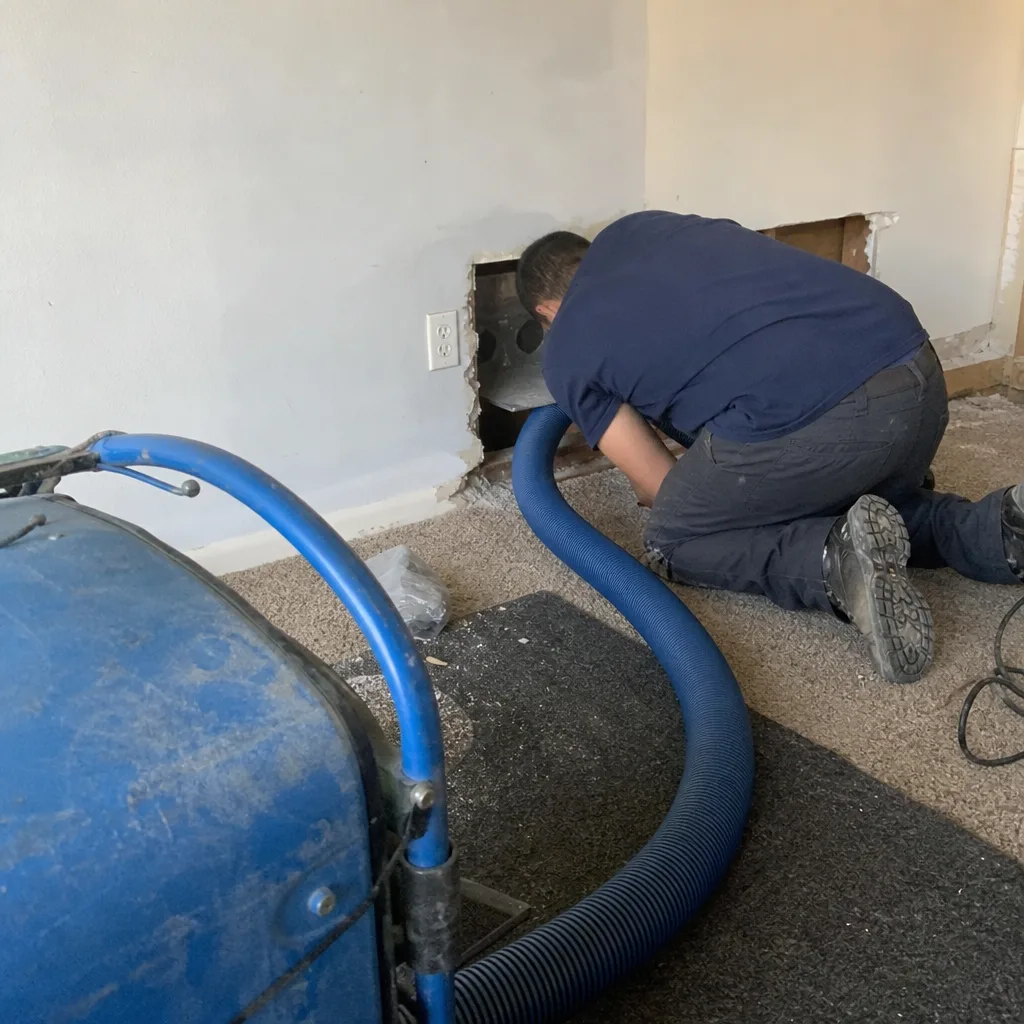
- Photos showing a single vacuum hose and no access cuts. Proper cleaning of a connected duct system requires access. If every photo shows one hose at a floor register and no visible cut or access panel, the crew is vacuuming what they can reach through the grille and calling it a day.
- “Sanitizing included” with no EPA registration number. Any product claiming to sanitize should carry an EPA registration number. Ask for it. A contractor who uses a registered product will have the number on hand.
- Price quoted per vent. Per-vent pricing incentivizes a fast pass and encourages upsells. A whole-system price in writing, agreed before work starts, is the more honest structure.
- No before-and-after photos from your own job. Photos of your ducts, taken during the work, are documentation. Stock photos on a website are marketing.
- Sanitizing offered as a default rather than a recommendation. Cleaning is the service. Sanitizing addresses a specific condition, usually microbial growth or odor. A contractor who bundles it into every quote without looking at your system is selling a package, not a diagnosis.
None of these flags is proof of a bad job by itself. But three or four together tell you the contractor is running a volume operation, and the equipment is whatever makes the volume possible.
How to Cross-Reference Claims Against Photos and Training
Claims are words. Photos and training are evidence. The trick is knowing what to look for in each. This is where the diligence pays off, and it takes less time than you’d think.
Reading job photos
Look for three things. First, access cuts: visible openings in the duct where the brush or whip was inserted, ideally with the cut clearly made and later sealed. Second, containment: plastic sheeting or a containment zone around the work area, especially near registers. Third, the before-and-after pair taken from the same angle, showing the duct interior before agitation and after extraction. A crew that photographs its own work usually has nothing to hide.
What NADCA training actually covers
NADCA is the trade association for the air duct cleaning industry. A NADCA-certified technician’s training covers the assessment, cleaning, and restoration of HVAC systems, including equipment standards, containment practice, and verification of cleanliness. It’s not a badge that guarantees a good job, but it tells you the technician was trained on the same standards the serious end of the industry uses. Ask whether the crew has NADCA-trained technicians and how the crew’s equipment matches what the training calls for.
The matching test
Compare the equipment list to the photos. A contractor claiming truck-mounted negative pressure should have photos of a truck-mount setup, not a portable vacuum. A contractor claiming rotary brush agitation should have photos showing brush access and containment. When the claims and the photos line up, you’re looking at a real operation. When they don’t, keep calling.
Our own approach leans on the same logic, which is why we describe the equipment by name and can talk through it on a call. If you want to see the same principles applied to the other half of the air pathway, the process behind dryer vent cleaning is the closest analogue: containment, agitation, extraction, and a check that the run is actually clear.
Cleaning-Only Crew or Full-System Contractor?
Not every duct cleaning job needs a full-system contractor. But it helps to know which category you’re hiring, because the two serve different situations and represent different value.
What a cleaning-only crew does
A cleaning-only crew puts the system under negative pressure, agitates the ducts, extracts the debris, and leaves. That’s a legitimate service for a home with a clean system that has accumulated normal dust over time. The scope stops at the duct interior.
What a full-system contractor brings
A full-system contractor extends the work to the components the ducts connect to. Coil cleaning tools reach the evaporator coil, where dust and biological growth collect and restrict airflow. Blower wheel brushes clean the wheel that moves conditioned air, which is often the dirtiest part of the whole system. Duct sealing equipment closes the gaps that let air leak out before it reaches your rooms. That last step is the one most cleaning-only crews skip, and it’s the one that decides whether the ducts stay clean.
Honeywell and Aprilaire system knowledge fits here too. A contractor who understands whole-home filtration and humidity control can tell you whether your system’s air quality problem is a cleaning issue, a filtration issue, or a humidity issue. That’s diagnosis, and it’s a different service from a vacuum pass.
How to decide which one you need
- If you’ve noticed dust buildup, musty odors, or reduced airflow and your system hasn’t been cleaned in years, start with a full-system assessment.
- If the assessment finds disconnected runs, leaking joints, or a dirty coil, you need the repair and sealing work that only a full-system contractor can do.
- If the system is clean and the ducts just hold routine dust, a cleaning-only visit is reasonable.
- If you’re not sure, ask for a free estimate that includes an assessment of the whole air pathway, not just a price per vent.
For commercial buildings and property managers, the same logic applies at larger scale. The process behind our HVAC cleaning service covers the equipment side of that work, and a contractor who handles both residential and commercial brings the same containment standard to each.
The Questions to Ask Before You Book
You don’t need to become an equipment expert to hire well. You need a short list of questions and a sense of what a good answer sounds like. Here’s the list, in the order we’d ask it.
- What negative-pressure unit do you use, and what’s its CFM rating? A good answer names the unit and the number. “It’s a big one” is not an answer.
- What agitation tool do you use, and how do you handle trunk lines versus branch runs? The best answers differentiate by duct type and explain why.
- Do you use containment, and can you show me photos of it on a job? Photos should show plastic or sheeting around access points.
- Will I get before-and-after photos of my own ducts? The answer should be yes, with no hedging about “when we can.”
- Is the price per system or per vent? Per-system, in writing, agreed before work starts, is the honest structure.
- What does the sanitizing product’s EPA registration number say on the label? A contractor who uses a registered product has the number ready.
- Do you handle duct repair and sealing, or just cleaning? The answer determines the category you’re hiring.
Seven questions, one phone call. The answers sort contractors quickly, and a crew that handles all seven without flinching is the crew worth booking.
Common Mistakes to Avoid
- Booking off a coupon price alone. Coupon prices are a foot in the door, not a quote. Ask what the final bill covers and get it in writing before anyone arrives.
- Assuming a truck wrap means a clean job. Wraps and uniforms tell you a company has marketing, not that it has equipment. The CFM rating tells you more.
- Not asking for photos of your own ducts. Website photos of someone else’s job do nothing for you. Photos of your ducts taken during your cleaning are the only documentation that matters.
- Confusing sanitizing with cleaning. Sanitizing treats a specific condition. Cleaning removes the debris. If a quote bundles sanitizing into every job without looking at the system, push back.
- Skipping the dryer vent because the ducts were cleaned. A dryer vent is part of the same air pathway and carries a real fire risk when lint builds up. In Commerce City and around the metro, where dry air and heavy lint loads are common, it’s worth asking about separately.
- Hiring a cleaning-only crew to solve a repair problem. Leaking joints and disconnected runs don’t get fixed by cleaning. Ask whether the contractor can seal ductwork before you book.
- Not asking about containment. A crew that agitates ducts without containment spreads dust through the house. It’s a small question with a large consequence.
See the difference
 Before
 After
 Before
 After
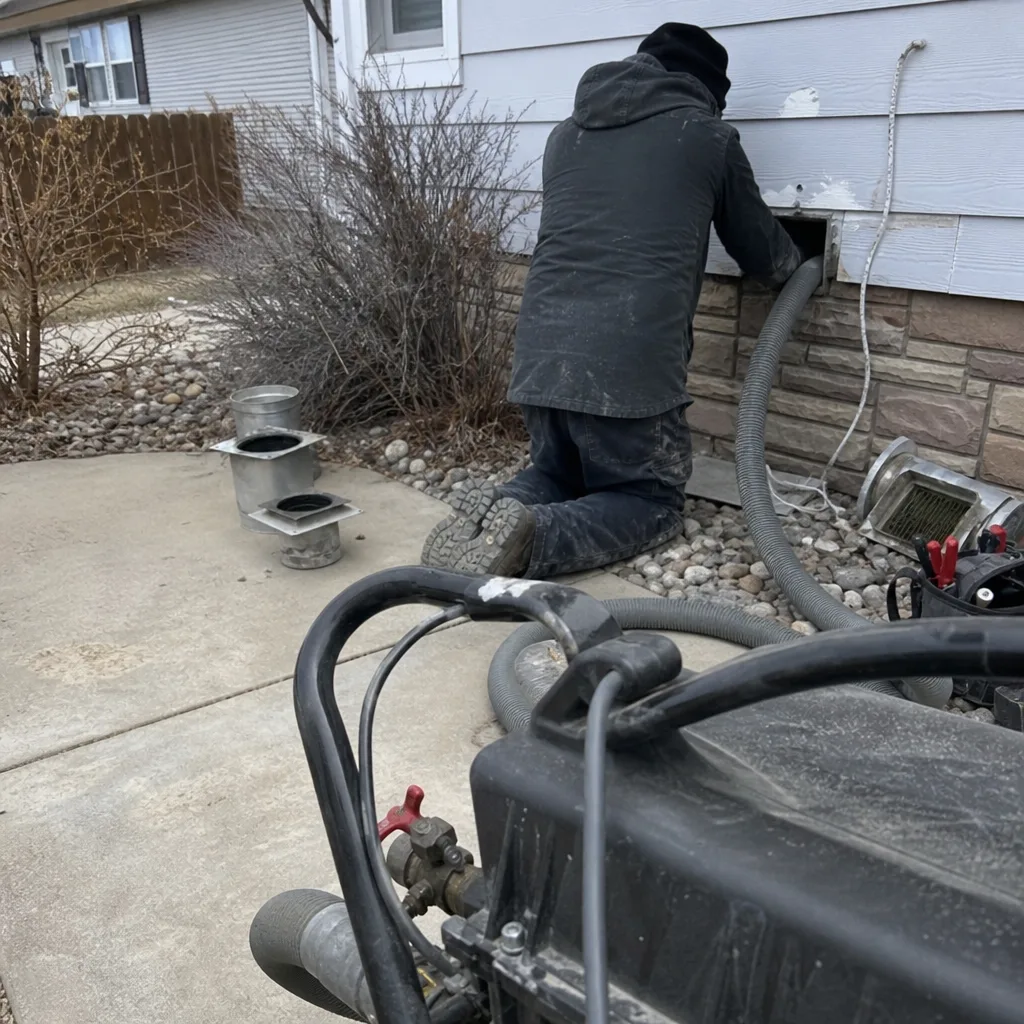 Before
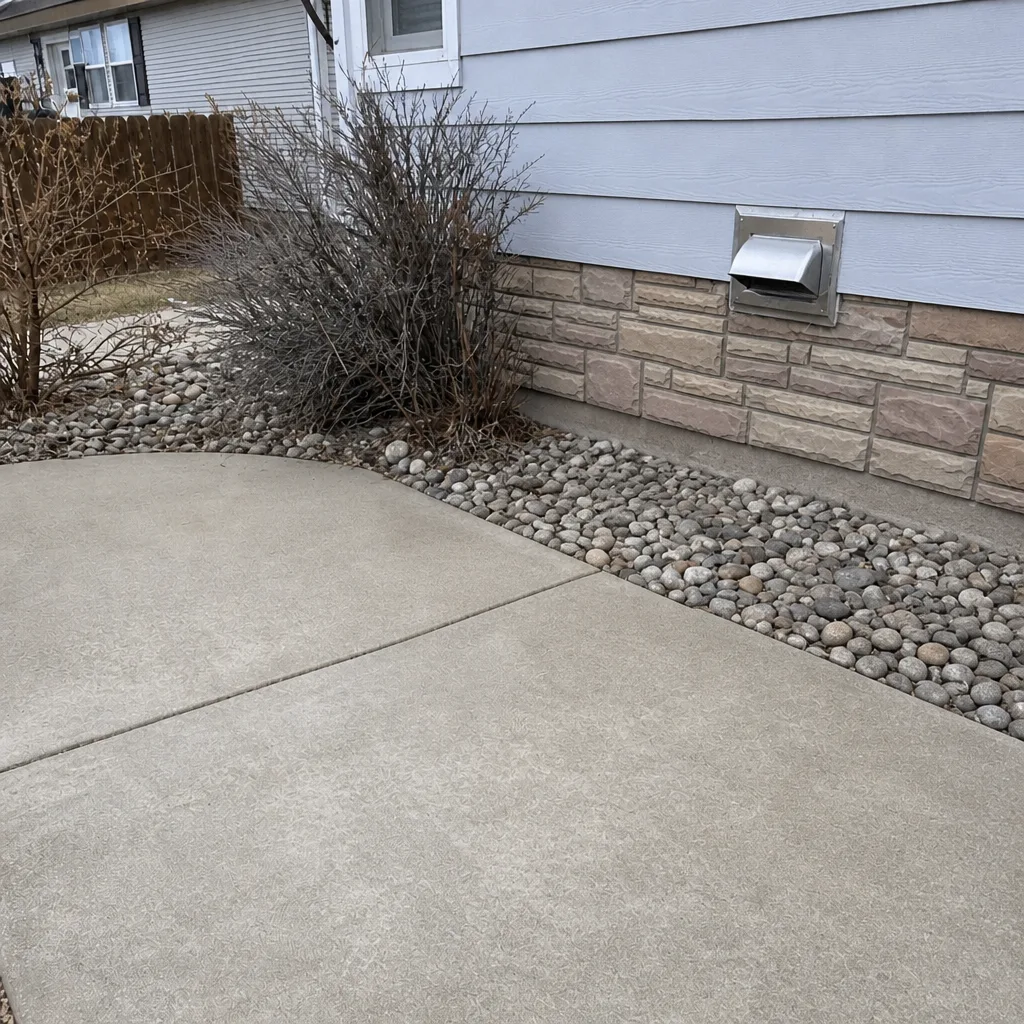 After
When to Call a Professional
Some situations call for a contractor rather than a filter change and a wait. If you’re seeing visible dust streaks at the registers, musty odors when the system kicks on, or allergy symptoms that get worse inside the house, those are signs the ducts or the components behind them need attention. If your HVAC system is running harder than it used to, or you’ve spotted disconnected flex duct in the attic or crawlspace, you need a full-system assessment rather than a cleaning pass. Property managers in Commerce City with a tenant complaint about odors or airflow should treat it the same way. Commerce City Air Duct Cleaning offers free estimates in Commerce City – call (877) 492-4447 to book an assessment of the whole air pathway.
Frequently Asked Questions
A contractor should be able to name their negative-pressure source and its CFM rating, whether that’s a truck-mounted unit or a portable HEPA vacuum. Contractor-grade equipment like Nikro units or Abatement Technologies air scrubbers is a strong signal. Call (877) 492-4447 for an exact quote – estimates are free.
Duct cleaning here is priced per system, not per vent, and the written estimate you receive before work starts is the final price. We quote per job after assessing the system, so the number reflects your actual ductwork rather than a teaser rate. Call (877) 492-4447 for an exact quote – estimates are free.
Cheap quotes usually reflect a different scope, not a better deal. A per-vent price with a coupon attached typically means a fast pass with a single hose, no access cuts, and no containment. A whole-system price covers agitation, extraction, and containment. Call (877) 492-4447 to compare a written whole-system estimate – estimates are free.
Ask for before-and-after photos of your own ducts, taken during the job. Photos showing access cuts, containment in place, and the duct interior before and after extraction are the documentation that matters. Call (877) 492-4447 to schedule an assessment with photo documentation – estimates are free.
Most homes do fine with a cleaning every few years, but the interval depends on your system, your filtration, and whether you’ve had renovation work. In Commerce City, where summers are dusty and the HVAC runs hard, homes near new construction or renovation projects may need attention sooner. Call (877) 492-4447 for an assessment – estimates are free.
NADCA certification is not required, but a NADCA-trained technician’s training covers equipment standards, containment, and verification of cleanliness, which is the same standard serious contractors work toward. Ask whether the crew has NADCA-trained technicians and how their equipment matches that training. Call (877) 492-4447 to talk through our equipment and process – estimates are free.
The Bottom Line
Choosing the right air duct cleaning brand in Commerce City comes down to asking better questions. The phrase “professional equipment” is marketing; the CFM rating of the negative-pressure unit and the name of the agitation tool are facts. Look for contractors who can name their gear, show containment in their job photos, document before-and-after results on your own ducts, and quote a whole-system price in writing before work starts. A full-system contractor with coil cleaning tools, blower wheel brushes, and duct sealing equipment brings more to the job than a cleaning-only crew, and the estimate tells you which one you’re hiring.
Commerce City Air Duct Cleaning uses contractor-grade equipment including Rotobrush rotary brush systems, Nikro negative-air vacuums, and Abatement Technologies air scrubbers, and our technicians have up to 14 years of experience. We offer free estimates on every job. Call (877) 492-4447. We answer 24/7. Fast dispatch from 7am to 7pm, Sunday through Friday. You can also start with an overview of Commerce City Air Duct Cleaning and the services we cover across the full air pathway.
Written by the team at Commerce City Air Duct Cleaning.