
Last updated November 25, 2026
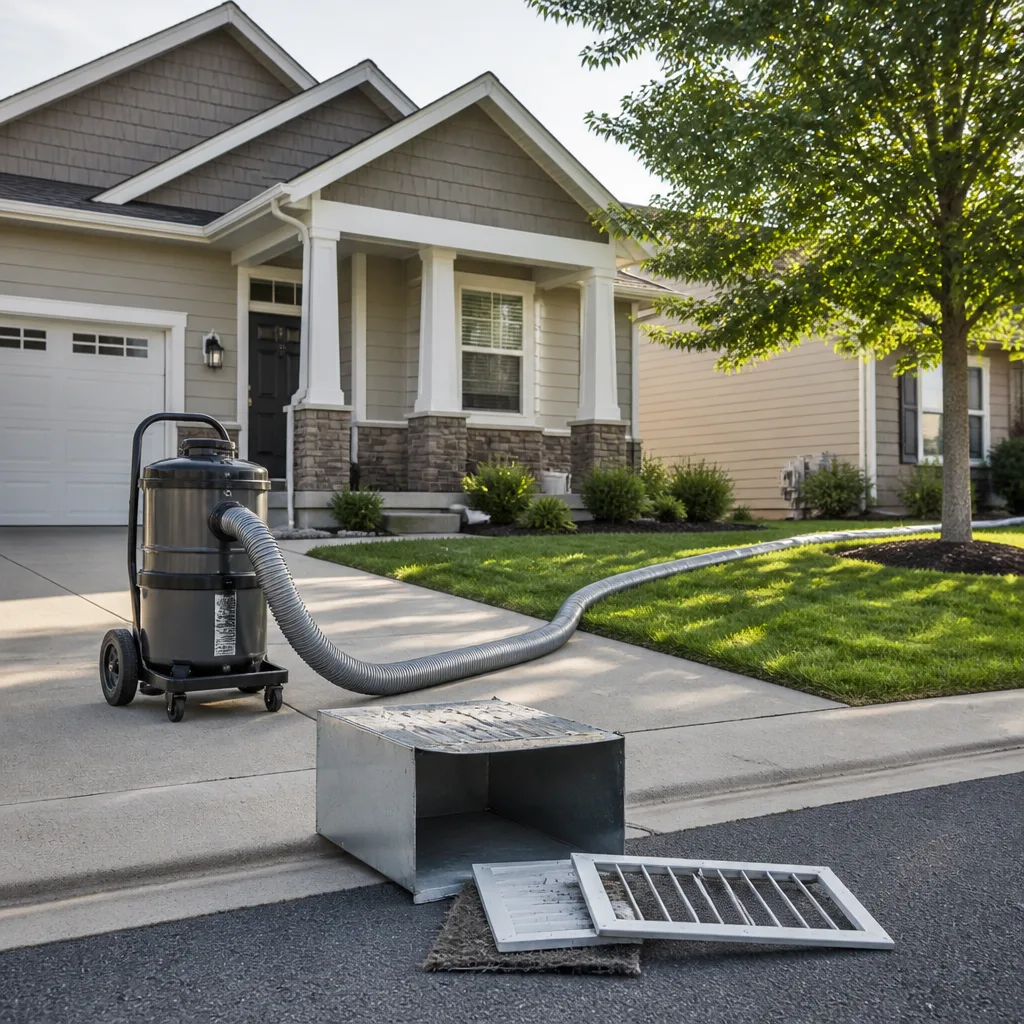 Whole-home duct cleaning
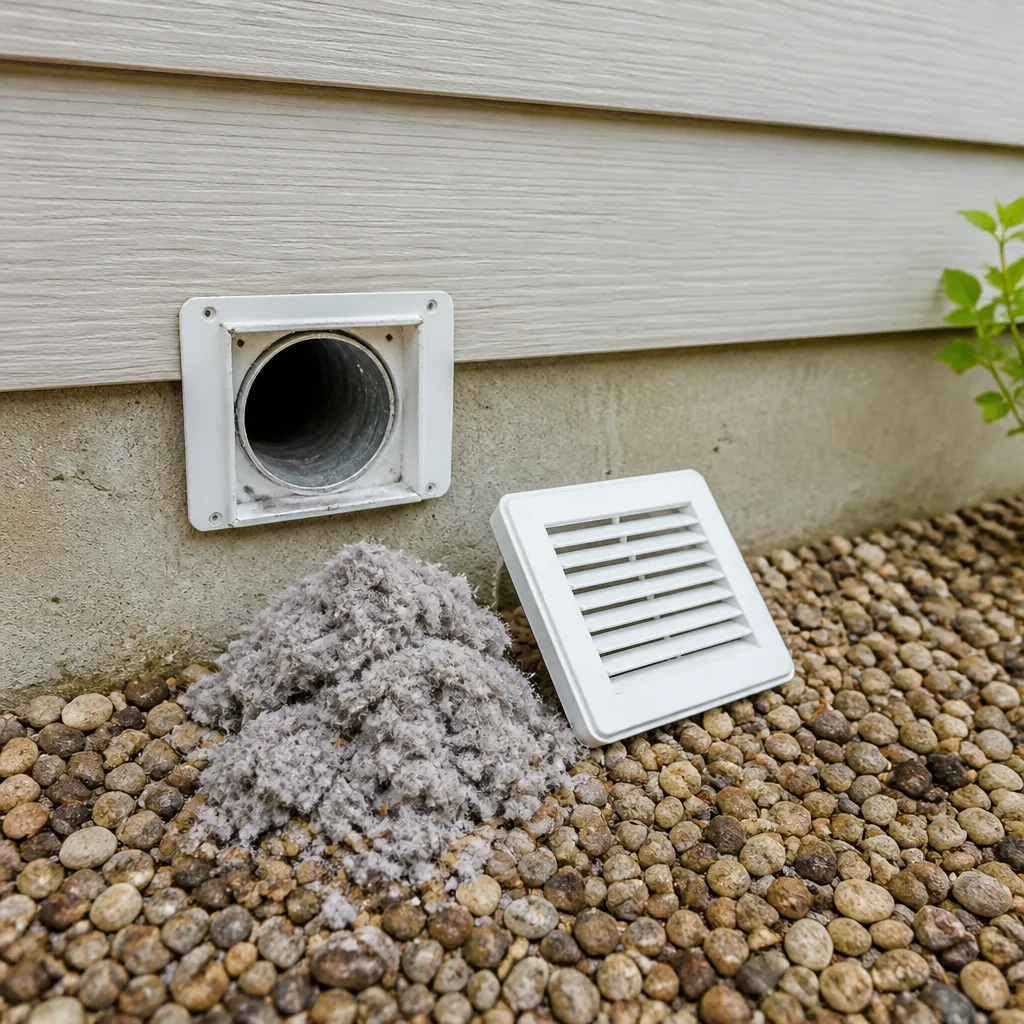 Dryer vent cleaning
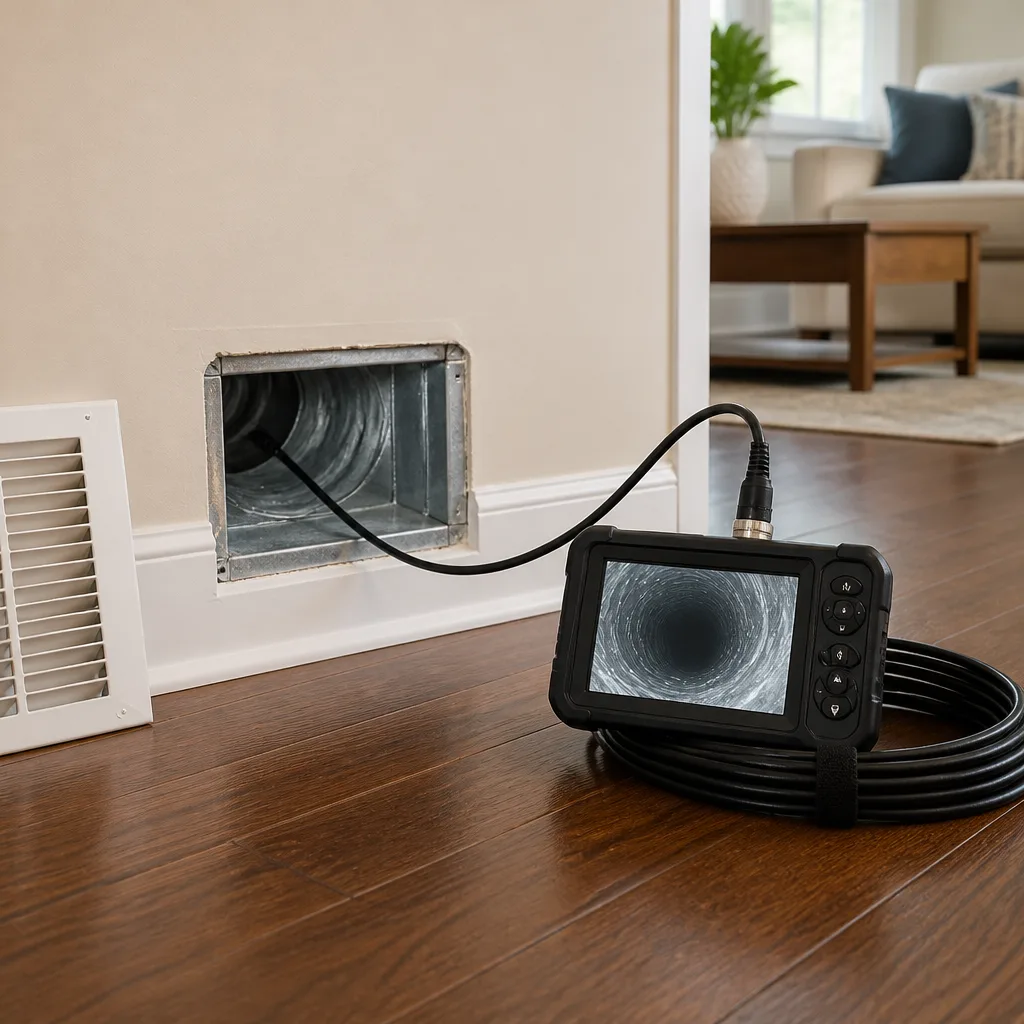 Camera inspection
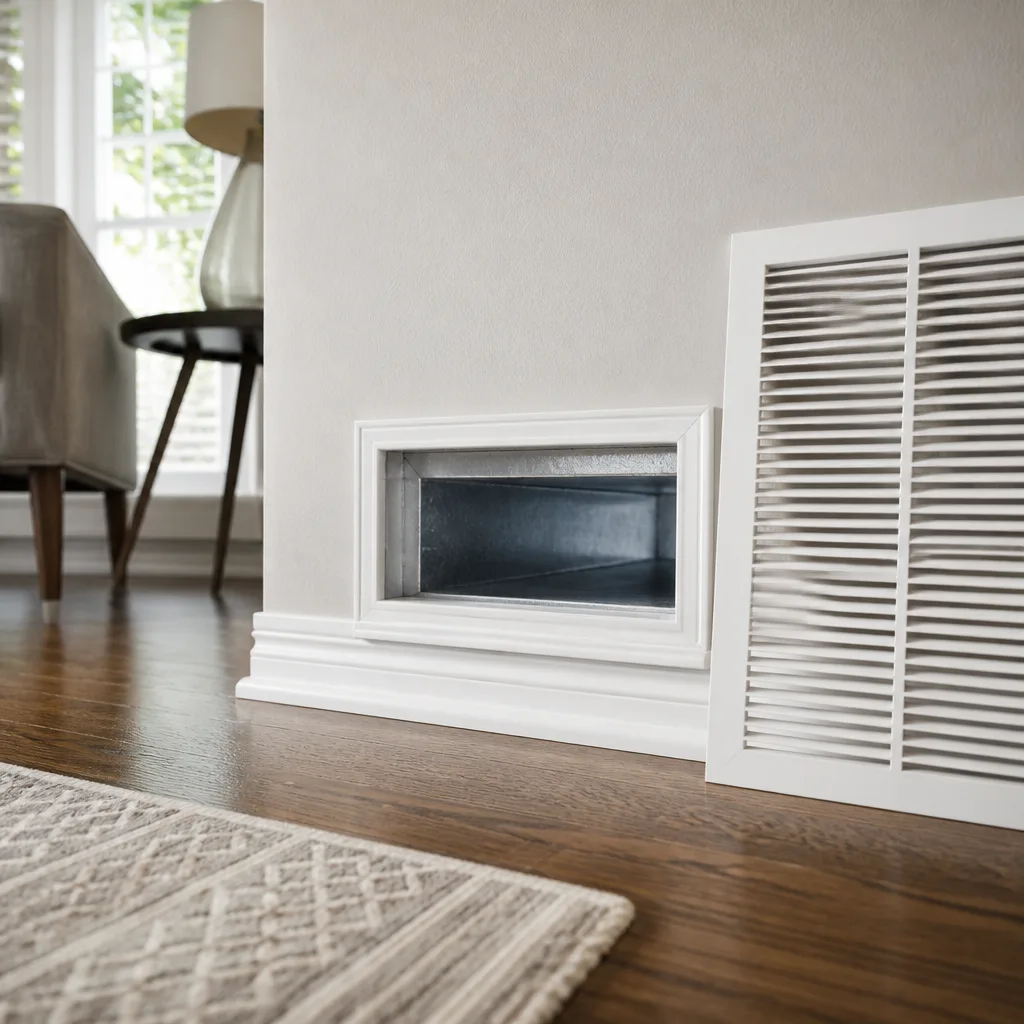 Sanitizing & deodorizing
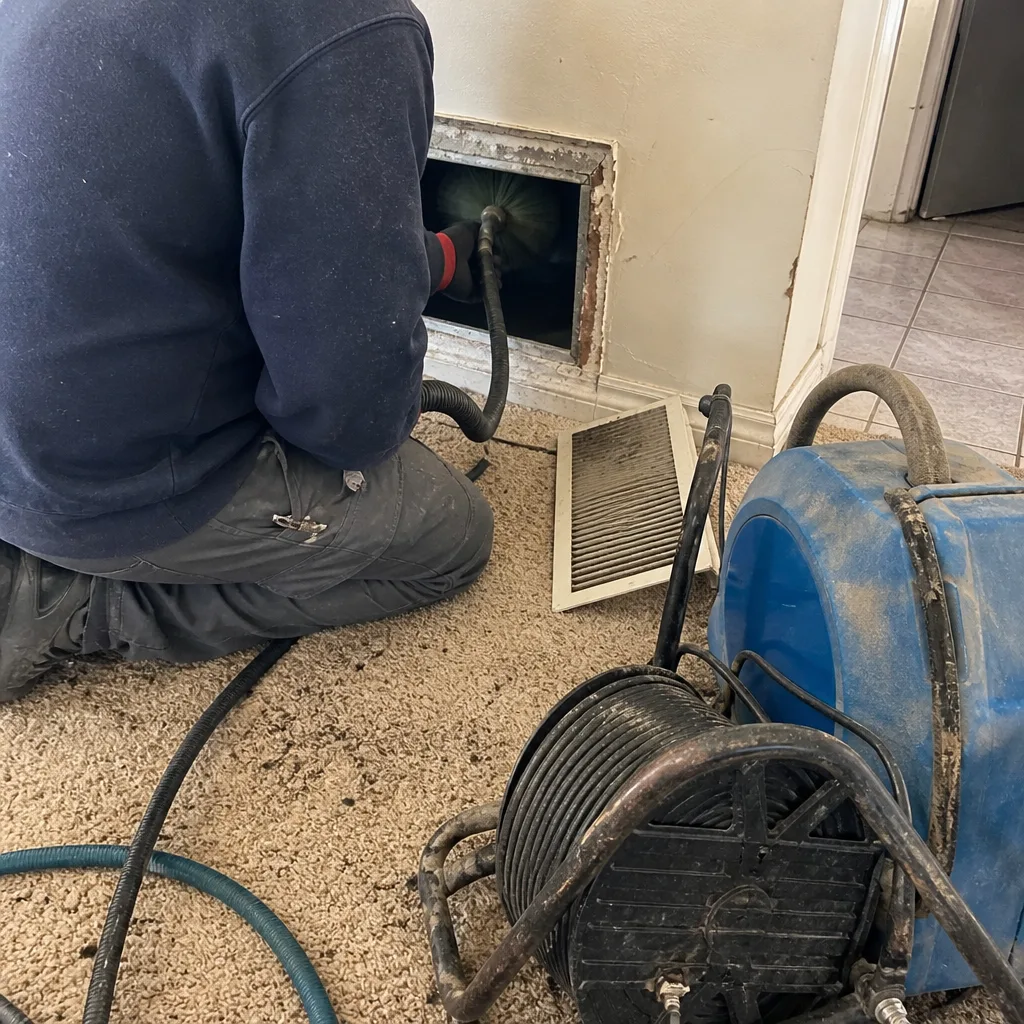
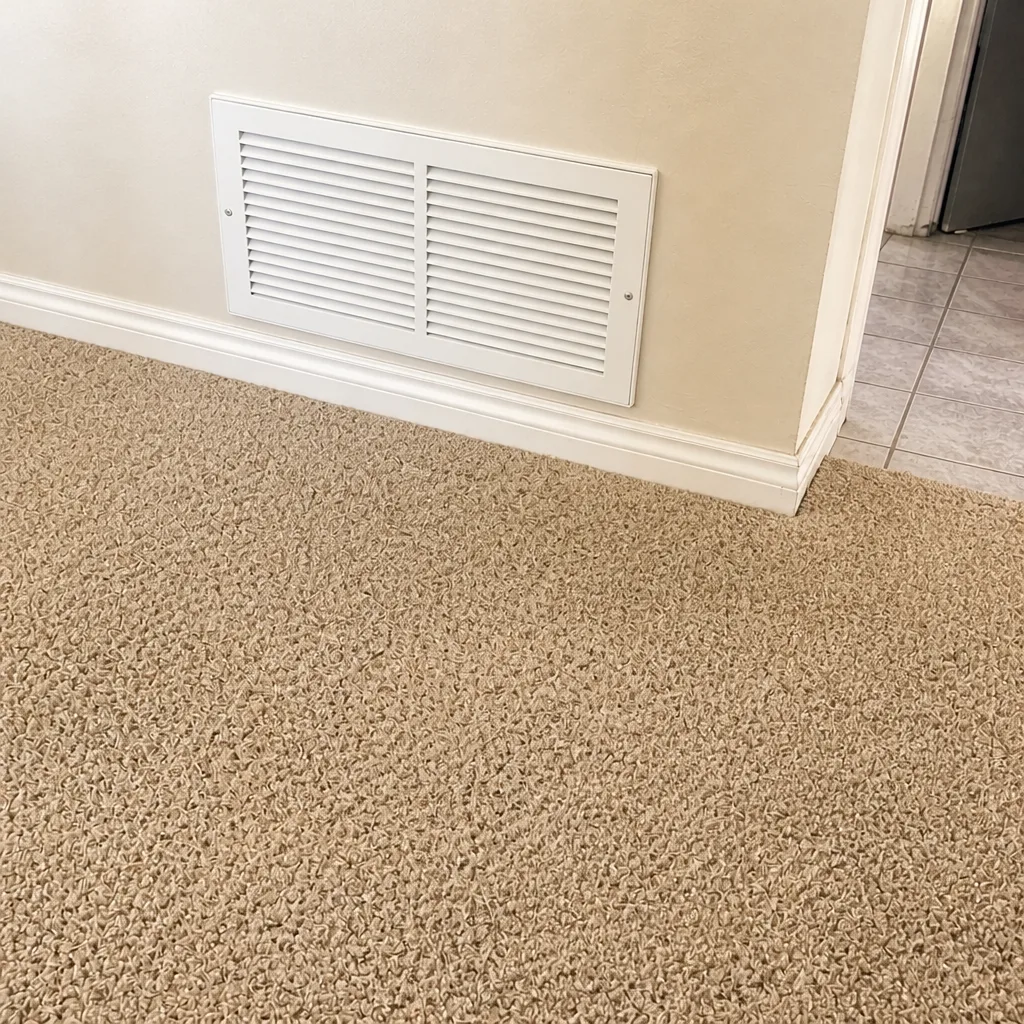
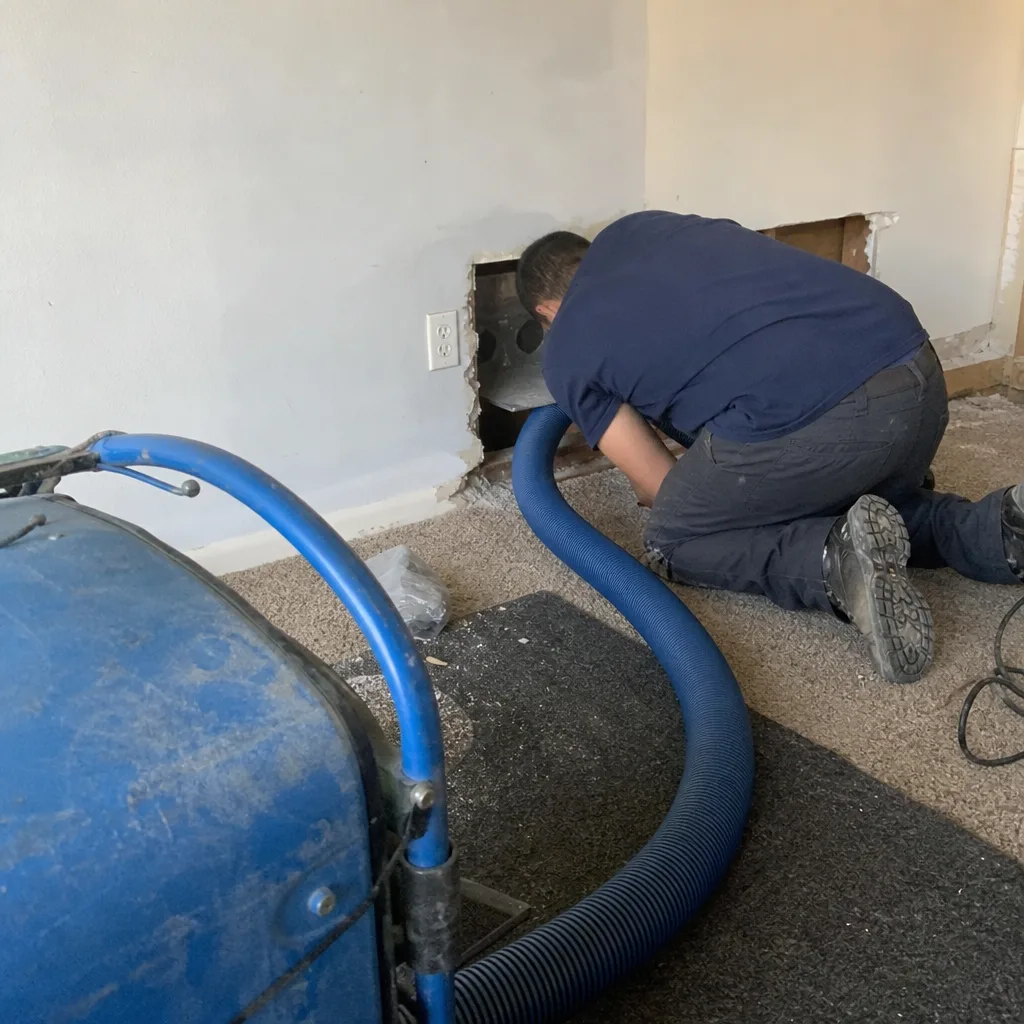
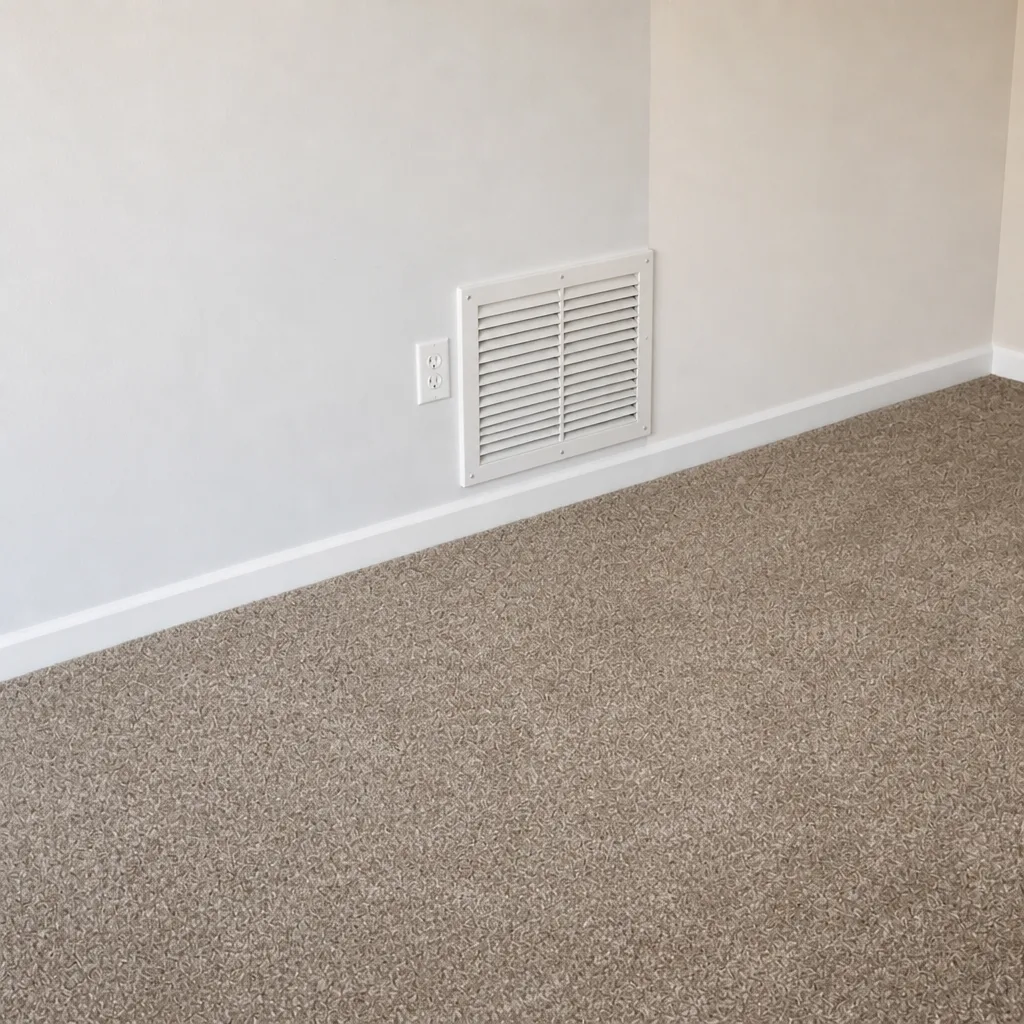
Whole-system duct and dryer vent check with before-and-after photos - you see exactly what came out of your vents
That "$99 whole-house special" is a bait ad - the real number appears once they are in your hallway, or the "clean" is a shop-vac at the register. We photograph the inside of your ducts before and after instead.
Air Duct Cleaning Warning Signs: A Commerce City Homeowner’s Reference Guide
Most guides to duct problems tell you to look for dust on the register. That’s the easy one, and it’s the one that shows up last. By the time dust is puffing out of a supply vent, the problem inside the duct has usually been running for a while. The signals that actually help you are quieter: a room that won’t cool, a filter that clogs faster than it used to, a smell that only shows up when the system starts. Each of those is a clue about a specific mechanical problem, and this guide treats them that way. We’ll walk through what each symptom points to, what cleaning can solve, and what only a repair will. If you’re in Commerce City, several local conditions shape these problems more than you’d expect.
Quick Answer
Warning signs that point to a real duct problem include uneven room temperatures, airflow that’s weak at some registers and strong at others, a filter that clogs in two weeks instead of three months, musty or burning smells at startup, visible dust accumulation, and signs wildlife has entered through exterior vents. Some of these clear up with a proper cleaning. Others, like a collapsed or disconnected branch run, need duct repair and sealing before cleaning makes any difference. That distinction is what separates a useful inspection from a wasted service call.
Styles & brands we work with
- Whole-home duct cleaning
- Dryer vent cleaning
- Camera inspection
- Sanitizing & deodorizing
Table of Contents
- Airflow Warning Signs and What Each One Suggests
- Odor Classification: Reading the Smell at Startup
- Filter Loading Rate as a Diagnostic Tool
- Commerce City Triggers: Dust, Storms, and Wildlife
- Cleaning Fixes vs. Repair Fixes
- A Step-by-Step Walkthrough: Diagnosing Your Own System
- Common Mistakes to Avoid
- Frequently Asked Questions
Airflow Warning Signs and What Each One Suggests
If one room in your house runs 4 to 6 degrees warmer than the thermostat setting, the problem is usually not HVAC capacity. In most homes we look at, a return that’s starving, a branch run that’s been restricted, or a joint that has come apart behind the drywall is the actual cause. Working backward from the symptom is the fastest way to find it.
Airflow problems come in three shapes, and each points to a different area of the system:
- Weak output at a supply register. If one vent blows noticeably softer than its neighbors, that branch is either obstructed by debris, closed off somewhere in the run, or disconnected at a joint. A disconnected flex duct is common in attics and crawl spaces, and it sends conditioned air into the cavity instead of the room.
- Excessive suction at the return. A return that pulls hard enough to bow a filter or whistle is often a sign of filter bypass: air is being pulled around the filter rather than through it. That unfiltered air carries dust straight into the blower and evaporator coil, and it’s a short path to a frozen coil in summer.
- Uneven room temperatures. Two rooms on the same trunk line that never match, no matter how you set the dampers, usually point to a branch restriction or a duct run that was never sized correctly for that space. Cleaning clears a debris restriction, but a sizing problem or a crushed run needs repair.
Commerce City homes built during the rapid subdivision growth on the north and east sides often have long flex runs through unconditioned attic space. Those runs are more prone to sagging, kinking, and joint separation than short rigid metal ductwork, which means airflow imbalance shows up here more than it does in older neighborhoods with tighter duct layouts.
Odor Classification: Reading the Smell at Startup
Smell is the most underused diagnostic signal in a home, and it’s the easiest one to misread. Three people will describe the same duct problem as “musty,” “stale,” or “dirty socks,” and those three descriptions can mean three different things. Paying attention to when the smell appears is as important as what it smells like.
Musty smell only at startup, fading after a few minutes. This is usually material sitting in the duct since the last cycle: dust on a damp coil, condensation in a low spot, or debris settled in a horizontal run. It’s the most forgiving of the three, and a thorough cleaning of the full air pathway handles it in most homes.
Persistent musty smell that doesn’t fade. When the smell stays with you through the whole cycle, the source isn’t cycling dust. It’s more often microbial growth on the evaporator coil or in wet insulation inside the plenum, or a duct run that’s pulling air from a damp crawl space or basement. Cleaning alone won’t fully solve this one if the moisture source stays; sanitizing treatment and, in some cases, sealing a leak that’s drawing in crawl space air is the real fix.
Burning smell when the heat first comes on. A faint burning smell the first time you run the furnace for the season is usually dust burning off the heat exchanger. A burning smell that persists past the first cycle, or that appears with the air conditioner, is different. Shut the system off and have it looked at by a technician before running it again. That’s an HVAC component issue, not a duct cleaning issue, and it belongs in the hands of someone who can inspect the heat exchanger and electrical components directly.
If you have a Honeywell or Aprilaire whole-home air quality system with a UV component or humidifier tied into the ductwork, odor patterns can also come from those components rather than the ducts themselves. Knowing the system is there changes how we approach the diagnosis, which is why we ask about it up front.
Filter Loading Rate as a Diagnostic Tool
If your filter clogs in two weeks instead of the three months it used to last, that change in rate matters more than the filter itself. A filter loading that fast is usually pulling unfiltered air into the return, and the most common cause is a duct leak somewhere between the return grille and the air handler.
Here’s why that happens. Your return duct should be under negative pressure, which means any gap, loose joint, or unsealed seam in that run pulls air in from whatever space surrounds it. If the return duct runs through a garage, attic, or crawl space, that surrounding air carries far more dust and particulates than the filtered air inside your home. The filter catches it, and the loading rate triples. Sealing that leak is the fix; changing the filter more often just repeats the problem.
We treat filter loading rate as one of the most reliable diagnostic tools available because it requires no equipment to observe. You just have to notice the change. A few things worth tracking:
- Note the date when you change your filter, every time. Write it on the filter frame.
- Compare the interval across the last few changes. A steady shortening is a signal.
- Check whether the loading is uniform across the filter surface or concentrated on one edge. An uneven load points to a duct entry or a filter that isn’t seated properly.
- Note whether the return grille shows dust streaks around the edges. That’s a visible sign the return is drawing air past the filter rather than through it.
Commerce City sits in a stretch of the Front Range where spring wind events move a lot of fine particulate, and dust storms that push through Adams County leave a visible film on everything. Homes here see filters load faster during those stretches regardless of duct condition, so the comparison that matters is year over year, not month to month. A filter that loads quickly in April and again the following April is behaving normally for Commerce City. One that starts loading in two weeks when it used to take eight is pointing at something mechanical.
Commerce City Triggers: Dust, Storms, and Wildlife
Three local conditions drive more duct problems in Commerce City than anything else we get called about: renovation debris, storm-driven particulate, and wildlife accessing the system through exterior vents. Each leaves a distinct signature.
Post-renovation debris. A remodel that opens walls, sands drywall, or cuts into the framing sends construction dust through the whole house for weeks. That dust settles into the ductwork, and standard filter changes during the project don’t catch it. Drywall dust is particularly fine and clings to duct walls; it also clogs coils more aggressively than household dust. If you’ve had work done in the last year and you’re seeing more dust on surfaces after the project than before, the ducts are the likely reservoir. A full cleaning after a renovation is a common step in Commerce City homes, and it’s usually worth doing before you notice symptoms rather than after.
Post-storm particulate infiltration. High-wind events common along this stretch of the Front Range can force fine dust through loose exterior vent terminations, around window seals, and into any part of the envelope that isn’t tight. If your home always feels dustier for a couple of weeks after a spring wind event and then settles back down, that’s normal. If it doesn’t settle back down, the ducts are holding what blew in.
Signs wildlife has accessed the duct system. Exterior duct terminations and dryer vents are the usual entry points, and a torn screen or a missing cap is the first thing to check. Signs to watch for:
- Droppings or nesting material visible near a register or in the basement, garage, or crawl space
- Scratching or thumping sounds from inside walls or near the air handler when the system isn’t running
- A persistent musky or animal odor that doesn’t match the startup-fade pattern described above
- Visible damage to the exterior vent cover or screen
If wildlife has been in the system, cleaning without first confirming the animal is out and the entry point is sealed accomplishes nothing. We always recommend identifying and closing the entry point before cleaning, and we can inspect the exterior terminations as part of the assessment.
Cleaning Fixes vs. Repair Fixes
The single most valuable distinction in this entire guide is this: some symptoms resolve with a proper cleaning, and some don’t. Knowing which you’re looking at saves you from paying for a cleaning that doesn’t solve the problem, and it tells you when a repair is the right first step.
Here’s a straightforward breakdown:
- Symptoms cleaning resolves: dust buildup on registers and diffusers, a filter loading faster than usual (assuming the cause is accumulated debris rather than a leak), musty smell that fades after startup, visible debris inside supply and return runs, dryer vent lint accumulation, and general post-renovation dust load.
- Symptoms that require duct repair or sealing first: airflow weakness isolated to one branch run, a duct run that has visibly collapsed behind a register, persistent musty smell tied to a leak drawing crawl space or attic air, filter loading caused by a return leak, disconnected flex ducting at a joint, and any damage from wildlife activity.
- Symptoms that belong with an HVAC technician, not a duct cleaner: burning smell that persists past the first heat cycle of the season, unusual noises from the air handler, refrigerant-related symptoms like frozen coils, and any suspected heat exchanger issue.
The repair piece matters as much as the cleaning. Duct repair and sealing isn’t just patching a hole; it’s restoring the pressure balance and making sure the system holds after the work. A run that’s sealed and tested performs differently than a run that’s been taped over and left. And if a leak is pulling unfiltered air into the return, cleaning the ducts first and sealing afterward gets you a clean system. Sealing without cleaning, or cleaning without sealing, gets you halfway there.
This is where the full air pathway matters. Supply and return ducts, dryer vents, HVAC components, and the sealing work all interact, and a technician who’s using Rotobrush rotary brush systems and Nikro negative-air equipment to mechanically agitate and extract debris is looking at the whole picture at the same time. Abatement Technologies air scrubbers come into play on projects where contamination control matters, and that’s often the case after renovation work or wildlife intrusion. It’s a different scope of work than running a vacuum over the registers.
A Step-by-Step Walkthrough: Diagnosing Your Own System
You don’t need equipment to run a basic diagnostic on your own system. You need a thermometer, a few minutes, and a willingness to write down what you find. Here’s the sequence we recommend, and it’s the same approach a technician starts with on arrival.
- Check every register individually. Hold your hand at each supply and note whether the output feels consistent. A weak register isolated to one room is the strongest single indicator of a branch restriction or a disconnected run.
- Note the temperature spread between rooms. A simple thermometer left in a room for a few hours tells you the delta. If one room stays 4 to 6 degrees off the thermostat setting no matter what you do, the branch feeding it is suspect.
- Inspect the filter. Note the load pattern and the date it was installed. If you don’t have the date, note it now and start tracking.
- Check the return grille and surrounding drywall for dust streaks. Streaking means air is moving where it shouldn’t, and that usually means filter bypass or a return leak.
- Run the system and note any odor, along with exactly when it appears and how long it lasts. Fades in a minute or two: debris. Persistent: moisture or microbial issue. Burning: shut it off and call an HVAC technician.
- Walk the exterior of the home and inspect every vent termination. Look for torn screens, missing caps, or visible gaps. This is the most overlooked step and the one that catches wildlife entry early.
- Check the dryer vent independently. A dryer that takes longer than one cycle to dry a load, or that gets hot to the touch, needs the vent inspected. Dryer vent lint accumulation is a fire risk, and it’s separate from the HVAC duct system.
Write down what you find. When you call for an assessment, those notes make the conversation far more useful than a general description of “the ducts feel dirty.” A technician can come in with a clear idea of where to look first. Our technicians have up to 14 years of experience reading these exact patterns, and the notes from a homeowner who has done the walkthrough often shorten the diagnostic process considerably.
Common Mistakes to Avoid
- Assuming the only sign is visible dust. Dust at the register is the last symptom to appear and the least diagnostic. Airflow and filter loading changes show up first and point more precisely.
- Calling for a cleaning when you actually need a repair. If the airflow problem is a collapsed or disconnected run, cleaning the ducts won’t fix it. Ask any contractor you call whether they can diagnose structural duct issues, not just clean.
- Judging a contractor by the price alone. A very low quoted price is often the front end of a bait-and-switch arrangement where the price climbs once the technician is on site. A legitimate estimate is a flat price per system agreed before work starts, not a per-vent price that balloons.
- Skipping the exterior vent inspection. Torn screens and missing caps are the entry point for wildlife, and Commerce City homes with older exterior terminations are prone to it. A five-minute walk-around catches the problem before it moves inside.
- Assuming a filter change solves a fast-loading filter. If the filter is clogging in two weeks instead of three months, a duct leak is pulling dust into the return. Changing the filter more often just repeats the cycle.
- Treating dryer vent cleaning as a separate, optional item. Lint accumulation in a dryer vent is a fire risk, and it’s worth checking on its own interval regardless of what the HVAC ducts are doing.
- Ignoring the smell pattern. “Musty” tells a technician very little. “Musty at startup, fades in two minutes” tells a technician exactly where to look first. Pay attention to timing.
When you’re ready to bring in a contractor, ask questions that separate a diagnostic approach from a blow-and-go operation. Specifically: Do they use negative-air equipment or just a vacuum? Can they explain what a branch restriction is and how they’d find one? Will they show you before-and-after photos of your own system? A contractor using Rotobrush rotary brush equipment and Nikro negative-air vacuums is set up to answer those questions. One using a shop vac and a brush isn’t.
For a fuller picture of what a professional assessment looks like, our guide to air duct cleaning covers the process step by step, and our dryer vent cleaning page explains why that service deserves its own attention regardless of the duct system’s condition.
See the difference
 Before
 After
 Before
 After
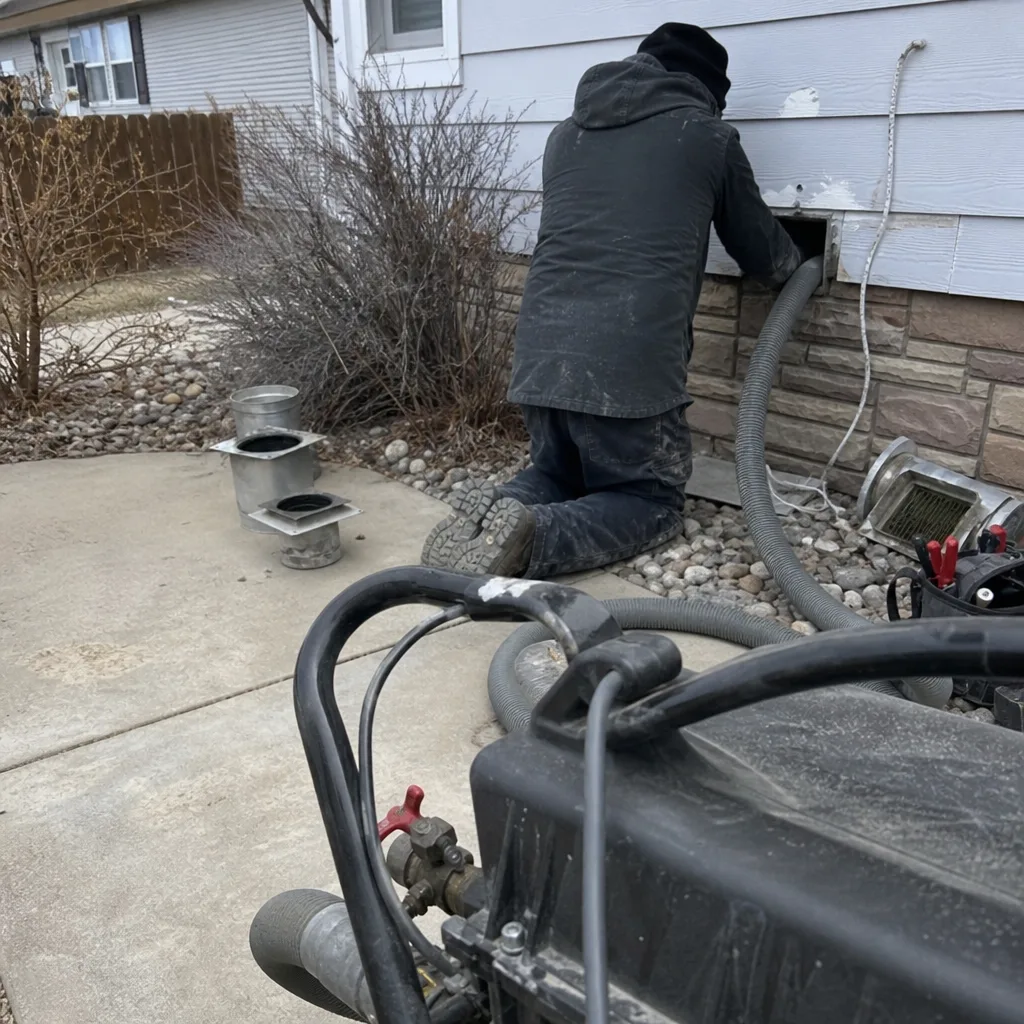 Before
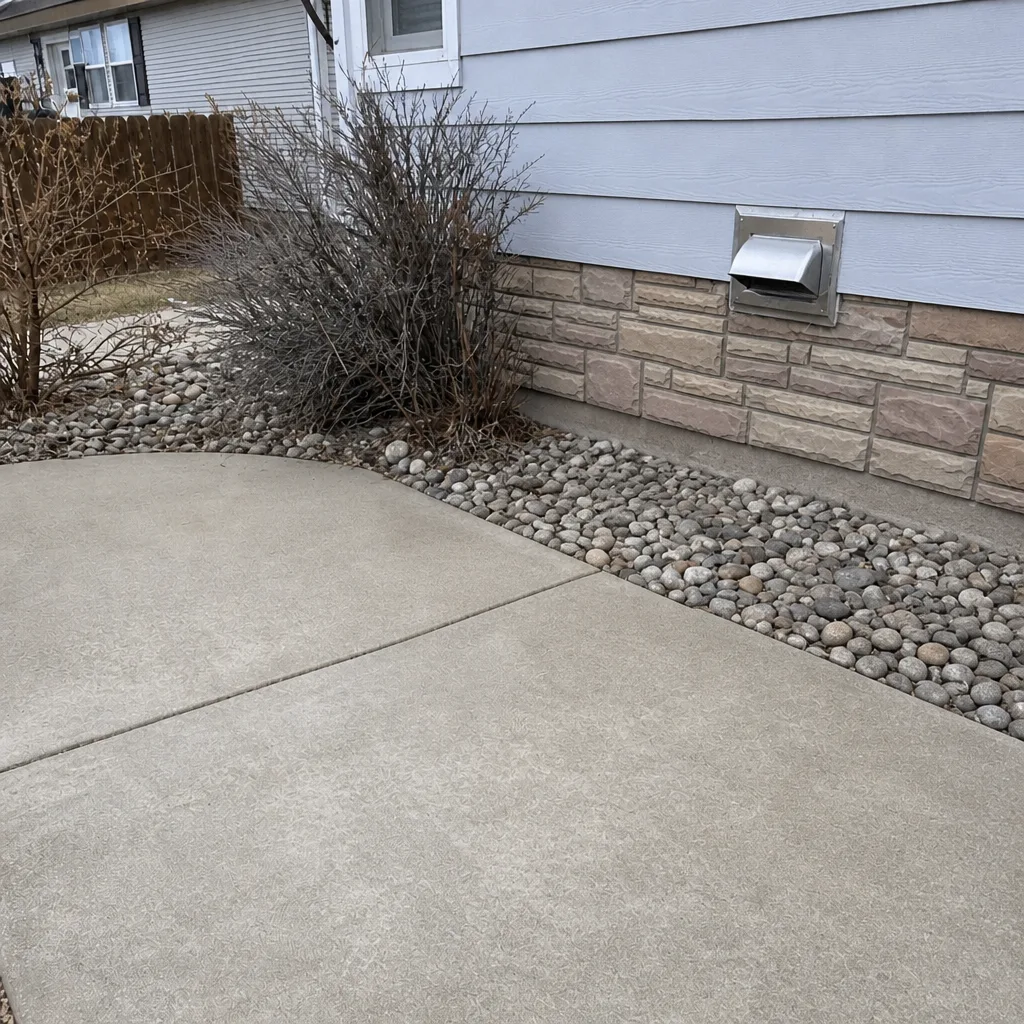 After
When to Call a Professional
Call for a professional assessment when any of these apply:
- One room consistently runs 4 to 6 degrees off the thermostat setting and adjusting the dampers doesn’t change it
- Your filter is clogging significantly faster than it used to, and the pattern is steady across multiple changes
- You notice a musty smell that persists past the first few minutes of a heating or cooling cycle, or any burning smell that appears with the air conditioner or persists with the furnace
- You’ve had recent renovation work and the dust levels haven’t returned to normal
- You see signs of wildlife access near a register, in the basement, or at an exterior vent
- Your dryer takes longer than one cycle to dry a load, or the dryer vent termination is clogged or damaged
Commerce City Air Duct Cleaning offers free estimates in Commerce City. Call (877) 492-4447 for a walkthrough of your system. We answer 24/7. Fast dispatch from 7am to 7pm, Sunday through Friday.
Frequently Asked Questions
Visible dust at registers is the weakest signal; the stronger indicators are airflow imbalance between rooms, a filter loading much faster than it used to, persistent musty odor, and signs of wildlife or recent renovation debris. If you notice two or more of those together, an assessment is worth the call. Call (877) 492-4447 for an exact quote; estimates are free.
Cost in Commerce City depends on the size of the system and the condition of the ducts, so there isn’t a single honest number. The proper way to price it is a flat price per system, agreed in writing before work starts, based on the technician seeing what’s actually there. Be wary of any quote that gives you a low headline figure before anyone has looked at the system. Call (877) 492-4447 for an exact quote; estimates are free.
Low quotes are often the first half of a two-step pricing structure, where an initial coupon price becomes a much larger invoice once the technician is on site and “discovers” additional work. The other explanation is scope: a shop vac and a brush costs far less to run than Rotobrush rotary brush systems and Nikro negative-air equipment, and it delivers far less. Ask what equipment a contractor uses before comparing prices. Call (877) 492-4447 for an exact quote; estimates are free.
Ask for before-and-after photos of your own ducts, taken during the job. A contractor with nothing to hide will show you the supply and return runs before and after, along with any sealing or repair work done. A written summary of what was cleaned, what was repaired, and what was sealed is the other marker of a legitimate job. Call (877) 492-4447 for an exact quote; estimates are free.
There’s no universal interval, and anyone quoting one without looking at your system is guessing. Homes in Commerce City with recent renovation work, pets, or high dust exposure may need it more often; a tight home with a well-sealed system may go years between cleanings. What matters is responding to the symptoms, not the calendar. Call (877) 492-4447 for an exact quote; estimates are free.
No. Cleaning removes debris, but it can’t reattach a disconnected run, restore a collapsed flex duct, or seal a leak that’s pulling unfiltered air into the return. Those are repair-and-seal issues, and they need to be addressed before or alongside cleaning. A contractor who can do both in one visit has the right scope for a Commerce City home with this kind of problem. Call (877) 492-4447 for an exact quote; estimates are free.
The Bottom Line
The signs that matter most are the quieter ones: a room that won’t match the thermostat, a filter that clogs faster than it used to, a smell that appears at startup and stays. Those point to specific mechanical causes, and each requires a different response. Cleaning resolves debris and odor issues; repair and sealing resolve airflow restrictions and leaks; an HVAC technician handles anything with a burning smell or a suspected component failure. Commerce City homes deal with a particular mix of renovation dust, storm-driven particulate, and wildlife access through exterior vents, and a diagnostic eye on those triggers catches problems early. For a full-service approach covering cleaning, HVAC cleaning, sealing, and air quality sanitizing, start with a free assessment.
Contact Commerce City Air Duct Cleaning
If you’ve read through this guide and recognized your own home in a few of these symptoms, the next step is a walkthrough with someone who can diagnose the whole air pathway, not just vacuum what’s visible. Commerce City Air Duct Cleaning offers free estimates for homeowners and property managers across Commerce City. Call (877) 492-4447. We answer 24/7. Fast dispatch from 7am to 7pm, Sunday through Friday. The estimate is free, and the written estimate sets the final price.
Full-system service means cleaning, dryer vent clearing, HVAC system cleaning, duct repair and sealing, and air quality sanitizing in one engagement, so you’re not coordinating multiple contractors for one problem. Learn more at Commerce City Air Duct Cleaning.
Written by the team at Commerce City Air Duct Cleaning.